Saturday, April 21, 2018

Historical Fiction and Feminism | Olivia J

"No matter what you do, your job is to tell your story," Gary Vaynerchuk


I just can't hop off the literary analysis train, can I? 

Disclaimer: I am not an authority figure on the history of feminism. I also don't read or write all that much historical fiction, at least not at the frequency at which I write contemporary or survival fiction. Hence, this is not comprehensive or set in stone by any means. These are just my thoughts, here to get you thinking. 

Historical fiction is too feminist. 

Let me explain. 

I've been in a reading slump for the past two weeks, so I've been rereading some of my favorite books that are way overdue for a reread, and this includes the Vengeance Road duology by Erin Bowman. (Read my review for Vengeance Road and Retribution Rails at the respective hyperlinks.)

However, I'd like to re-explore the gripe I had with both of these books, concerning the feminist prose and undertones.  I also had this gripe with These Shallow Graves, among other historical fiction works that take place before the first wave of feminism. 

For Vengeance Road, the focus is less on feminism explicitly, but many of the thoughts and quips of Kate, the main character, reflect a modern egalitarian mindset. She comments regularly on the problematic state of women in the West, and how others perceive her. While there's nothing inherently wrong with this commentary, it feels too self-aware - and at times, unneeded - for the context of both the story and the character. 

For Retribution Rails, Charlotte, the book's main female character, is an outspoken feminist. This works slightly better in the context of the character, since Charlotte is an educated, wealthier girl, and her choice of career faces a lot of sexist backlash. However, it all still feels out of place. 

Why? 

Because feminism existed differently back then. It was viewed differently then, and feminism isn't even viewed the same as it was ten years ago. The author tries to put on this lens of twenty-first century morals onto a story that took place over one hundred years ago. This disconnect jolts the reader out of the story, and dates the writing significantly. 

The thing is, is that now we can look back on history and say that "yeah, that was wrong," and "yeah, that was oppressive," but these characters set in the past don't have the cultural context we have now. Many of them probably didn't have a problem with the way their society worked, but still made the best of what they had and who they were in the context of their culture. 

Another problem is that, back then, feminism was a beyond radical idea. Not many people - even women - supported it. Sure, people have believed in feminism since the beginning of time, but only recently has it become a mainstream thing.  But having all of these main female characters ALL be these radical feminists feels unrealistic, especially considering the time period. Surely, not all women felt the same way, as women don't feel the same way even today. Often, the women who don't challenge the social order or make these feminist comments are painted as weak, which is a whole other problematic can of worms . . . 

Going back to my point, it doesn't feel realistic for all of these young female characters in historical fiction to be radical underground feminists. Sure, the late-1800s was when feminism was gaining leverage, but by saturating every single historical fiction story with an overtly feminist character paints an unrealistic picture of how most women believed and behaved. 

Granted, I understand why both the authors wrote these themes and specific lines in, and the publishers kept them in. They kept them in because we live in a feminist era, and the target audience for these books are young people, who are more feminist than ever. By weaving in some nice feminist propaganda into modern historical fiction stories, it allows for easy digestion of the actual state of women in said era. It misrepresents the good - and bad -  of these time periods. 

Which, now that I think about it, is kind of worse than just leaving the issue alone. 

I'm not saying that feminist females in historical fiction are bad, or should be erased. What I am saying is that the over-saturation of feminism in historical fiction is actually very unrealistic. Not every historical fiction story with a female main character has to tackle feminist content. 

What is your take on feminism in historical fiction? Do you believe it has been too modernized in the context of historical fiction? What is the place of examining social issues in historical fiction? Can a female character in historical fiction still be a strong character without being an overt feminist? 

(The answer to that last question is a resounding 'yes', by the way.)

As edgy and controversial as always, 

~The WordShaker

Saturday, April 14, 2018

Gendered Prose: A Study of "A List of Cages"

"Writing is easy. All you have to do is cross out the wrong words," - Mark Twain

Man, I'm just whipping out these analysis posts like there's no tomorrow . . .

Anyway, my current read is A List of Cages by Robin Roe, and I'm about halfway through it. 

However, what I have read got me thinking. A List of Cages features two male protagonists - a senior and a freshman in high school - written by an adult female. And as I was reading, something just didn't feel . . . right. 

If you're not an avid reader, then you might not know what I mean when I say a character "doesn't sound like a guy" or "doesn't sound like a girl" - like, of course they don't, they're just black and white letters on a page; or, men and women don't 'sound' a certain way when written. 

However, in true Olivia fashion, I'm about to lay out some literary truth on you . . . 

Gendered prose is a thing. 

First, of course, we need to define what I mean by 'gendered prose'. (This more specifically applies to male writers writing female characters or female writers writing male characters.) 

Gendered prose is when the character in question has thoughts, actions, feelings, and syntax that aligns with their gender. In short, when read within the context of the story, the character 'sounds female' or 'sounds male'. Which, when stated like that, sounds stereotypical. 

However, as a general rule of thumb, men and women are different. Not only are they biologically different, their brains are wired differently, men and women react to certain situations differently, the list goes on. 

Now, don't misconstrue any of this and assume that I mean every male character should respond to X stimuli the same way, or that female characters have to be dreamy flower-children, etc. What this means is that, at the most elementary level of the character, their gender has to factor into their identity, and subsequently their thoughts and actions. This involves understanding men and women - and their differences - on a biological and sociological level. 

Why is this important? Why can't we just write people, and then figure out their gender later? 

As I've just stated, whether you like it or not, gender/sex is a cornerstone in a person's biology and identity. Therefore, it will influence them as a whole person. However, it's important for a character to 'sound' like a certain gender for this one reason:

Having a male character read as male is important for the reader being able to visualize and connect with the character, both physically and mentally, for the character to accurately gel together in the reader's mind. If this aspect of the prose fails, then there will be a disconnect between what the prose states and what the prose unintentionally implies. 

Now, the real question is what makes the prose and a character sound 'male' or 'female'? 

That's a good question, and I'm not entirely sure I have a concrete answer. This is the dilemma I found myself in with A List of Cages. Something didn't feel right and I knew what it was, but I couldn't understand why. 

However, after a discussion post on Instagram (@olivia.j.the.wordshaker) and doing some further digging, I've realized that it comes down to a couple of things. If not, at least use this as a brainstorming place in improving your ability to write the opposite gender. 

1. Emotions

This is a big one. As a general rule, women are more outwardly emotional than men. Women also respond to stress and conflict differently than men do. Include descriptions of distinctly different physical and emotional reactions to stimuli. 

2. Interactions 

The way men interact with other men, the way women interact with other women, and the way men and women act together are three vastly different wheelhouses. 

3. Style/Syntax

This pertains to the actual words used to describe something, and the framing and structure of the sentences. Men tend to get right to the point, while women tend to be a bit more metaphorical and flowery. 


~

This is by no means a comprehensive list, and I suppose the takeaway from all of this is do your own research! Find out the differences, and work our your own way to write the opposite gender in the way that best fits the character and you as a writer. 

Again, take these tips with a grain of salt and avoid being stereotypical. Create your character and sprinkle these on like the sprinkles on top of a cupcake!

~The WordShaker

Saturday, April 7, 2018

You'll Be Like Faye by J.C. Buchanan | Book Review

"Good writing is clear thinking made visible," -Bill Wheeler

As you all know, I love myself a good self-published novel, supporting indie authors, all that jazz. But what I love even more is critiquing story and execution.

And that's exactly what we're going to be doing today. 


follow me on Instagram @olivia.j.the.wordshaker

You'll Be Like Faye is a middle grade novel by J. C. Buchanan. Buy and read the synopsis to You'll Be Like Faye here!


Disclaimer: I was sent this novel in exchange for an honest review. 

Spoilers, duh. 

The Bad

1. Carousel Dialogue 

This was You'll Be Like Faye's largest flaw. First, let's define the purpose of dialogue in a story. Dialogue is the spoken words that characters actually say out loud, and the purpose of this dialogue is like anything else in a story: it furthers the plot along and reveals aspects of characters. 

However, the dialogue in You'll Be Like Faye rarely adheres to this accepted definition. Much of the dialogue in YBLF doesn't serve much purpose, if at all. The menial dialogue causes scenes that should have been over a half a page ago to drag on. Story beats and defining character traits get repeated over and over through unnecessary dialogue.

Instead of spending her reader's precious time by deepening the relationships or characterization, much of the dialogue is spent on reiterating already established character traits and story elements. Buchanan attempts to make this dialogue plucky and witty, however, no new information is being presented, so the reader just ends up disregarding the conversation.

Another element to this systematic problem is that many conversations that would happen in real life - like, what we need at the grocery store, joking between friends - which aren't bad conversations on their own, but in fiction, these things are omitted because they don't actually add anything to the progression of the story or character development. 

2. Some nitpicky things.

These next few are less systematic problems, and more nitpicky things that would have improved my overall enjoyment. 

Brittney was extraordinarily underdeveloped, and I wanted to see much more from her. I suppose she wasn't supposed to be, but the plot kicks itself into motion because of her arrival, and the synopsis indicated that Brittney was an integral part of the story. However, there is very little time spend with her, and that created a disconnect, and almost a focus vacuum in the story. I saw so much potential to develop Brittney and her relationship with Faye/Heather, but there just wasn't much there. If Buchanan had developed this relationship, there would have been a stronger emotional center to the story, and the reader would have been able to root for Brittney as well as Faye. 

My other nitpick is how the story handled the plot. Surely, Faye's parents would serve jail time for child abduction, as well as have their own biological children taken away by social services. I would have liked to see more of the consequences of the reveal at the end, as this would have grounded the story in reality. Twelve year old Faye has just had her entire world turned on it's head, which will most definitely cause psychological problems for not only Faye/Heather, but her whole family. I'm just not sure I liked the light take on such dark and destroying subject matter such as child abduction, despite this book being middle grade. 


The Good

1. Story Conventions

The prose, if a bit lackluster at times, is clean and effective. If there were any errors, they didn't stick out to me and didn't detract from my enjoyment of the story. The characters, aside from Brittney, were fun and adequately developed. The suburban setting, as well as the development of the mystery - albeit a bit predictable - were effective and kept me engaged. 

Overall, You'll Be Like Faye isn't a book I would normally read, and that probably affected my enjoyment of it. However, I can't deny that, despite it's flaws, You'll Be Like Faye is a solid middle grade novel that doesn't shy away from some darker subject matter. 

Objective Rating: 7/10
Enjoyment Level: 6.5/10

~The WordShaker

Saturday, March 31, 2018

Netflix's "Atypical" and The Media's Portrayal of Dads | Olivia J

"All good writing begins with terrible first efforts. You need to start somewhere," -Anne Lamott

In recent Western media, there seems to be two types of Dads - the Bumbling, Comic-Relief Dad, and the Deadbeat, Absent Dad. 

While these two tropes can be respectively entertaining and effective, it paints a clear picture of what our culture believes about fathers in general. 

I recently binge-watched Netflix's Atypical, a family drama about a teenage boy on the autism spectrum, and was pleasantly surprised by the portrayal of the father, Doug. I could talk extensively about how the show succeeds in it's character development and execution of themes and messages, but, as the title suggests, I want to dive into what Atypical does so beautifully in portraying fathers. 


First off, Doug's characterization is refreshing. He's presented to the audience as not just some comic relief, but also as a human being with problems, thoughts, and complexity. This isn't something we see too often in father figures. Often, the father figure is a bumbling background idiot, or he's just an asshole because plot

However, Doug is portrayed as a human being, not as comedic relief or to give other characters a damaged background. It feels like he matters to the story as an individual, and not just as a plot convenience or to inspire other characters. We see the reasons and motivation behind his actions - bad and good -  and he truly becomes a heartfelt dad who is trying his hardest to connect with his son. 

Jumping off of Doug and Sam (the protagonist), his relationships with the people in his life are revolutionary. Not only does he have a good relationship with his daughter, he loves his wife (despite her infidelity), and desires desperately to connect with Sam - and does his best to do so. 

This trait is admirable, because all too often we see disconnected dads, out-of-touch dads, and terrible dads, but in actuality, most fathers aren't extreme. What makes this portrayal so revolutionary is that it portrays realistic, average fathers - ones who have the best intentions, but don't always succeed. Ones who care a whole lot, but sometimes make bad decisions. And those kinds of dads are the ones that we need to see more of. 

I probably could keep raving about Atypical and all of the things it does right (I'm looking at you, non-offensive-and-accurate-portrayal-of-autism), and the small, nit-picky things I would have changed. However, I digress. I think I've made my point. 

Here's to writing better dads! 

~The WordShaker

Saturday, March 24, 2018

Guest Post: Creating Strong Characters by Gabriella Slade

"Readers are not sheep, and not every pen tempts them," -Vladimir Nabokov

We all love a strong character.


That's a fact. We as readers love the ability to pick up a book and fall in love with a person who exists only between the pages of a book. As a writer, it's our job, to not only create a compelling story that pulls a reader in but to write about strong, well-developed characters for people to read about.


If a reader doesn't like the character they're reading about, they'll most likely put down the story. It's as simple as that.


When I sent off my own book, Show Me, to be read by beta readers, much of the feedback I received said my main character, Kade, was not very likable. He was moody, and dark, and needed a lighter side of his personality to balance him out. It surprised me, but I knew the changes needed to be made, so I went back to the drawing board and took some more time to get to know my character.


What are some of the things that make a character strong?
  • A backstory that is well developed throughout the course of the book/series
  • Both Positive AND negative traits
  • Quirks and Hobbies
  • Things he/she believes in
  • Passions
  • Dreams or plans for the future
  • Fears


Granted, that's a lot, so here are some questions used to develop these things even further than just a boring old bullet list.
  1. Who were his parents? Were they present throughout his childhood? Where are they today?
  2. What was his education like?
  3. What does he like to do for fun?
  4. What are some of his good and bad habits?
  5. Is he religious?
  6. What does he dream about doing one day?
  7. What is he scared of?
  8. Does he have any secrets?


OK, this is just yet another boring list, but it's also the starting point to getting to know your character even better.


When I dove back into Kade's development, I made sure to give him interests that weren't put there simply for the sake of the plot. I balanced out his darker, moody side by giving him a sense of humor, and made him less negative about every single little issue in his life. Sure he is still moody. He does tend to complain at times. But that's just because he's flawed.


A strong character is more an imperfect character, rather than a perfect one.


Maybe you're on the other side of the spectrum. Maybe you tried so hard to make your character good, that he is practically perfect. No imperfections. No fears. Unfortunately, that's just unrealistic and very unrelatable. Like it or not, you need to give your characters some spots. Does he take all his anger out on his family or friends? Does he blame other people for his mistakes? Does he lie, cheat or steal?


Just remember: Don't make the same mistake I did by making your character too unlikable because then you'll be in the same boat as I was.


You'll most likely spend a lot of time developing your characters throughout the writing and editing of your story. If you happen to be writing a series like I am, you'll have even more time to get to know your character. You'll also have the amazing opportunity to get to watch them grow. Maybe they'll mend some of their old flaws, and build new ones.


In the end, there will probably almost always be something you won't know about your character. But that's OK. Take the time, however, to learn about your characters, because if you don't know about your character, how will your readers?

~


Gabriella Slade is the author of the upcoming fantasy novel, Show Me. You can find her on Instagram @soulquestersaga, and on her website at gabriellaslade.com

Thanks for joining us, Gabriella! I hoped you learned something from her!

~The WordShaker

Saturday, March 10, 2018

A Writer's Love Letter to Theater | Olivia J

"Theater is the most immediate way in which another human being can share with another the sense of what it is to be a human being," -Oscar Wilde

There has never been a time where I don't remember being on stage. If it wasn't theater, it was dance. When I quit dance sometime in elementary school, I started theater in fifth grade, and it's been a part of my life ever since. The thing is: I don't know if theater is going to continue to be a part of my life beyond high school.

And so we find ourselves, nearly a decade later. This Saturday was my last show at Washington. I've made lifelong friends and forever memories. I'm feeling a whirlwind of everything, and so, I did what only I knew how do. I wrote about it. 


~

Dear WCHS Theater Department,

Thank you for making this place a home away from home. Sometimes my creative cave can be a little lonely, even when I do connect with other writers/artists. But you guys are loud and bright and crazy and full of love and sometimes it's everything I need on bad days. Thank you for accepting me even though I'm not pursuing a career in this field, even though I'm not 'like you'. 

What I really want to say is that I'm going to miss this. I'm going to miss the bleary-eyed trips to Steak 'n Shake. I'm going to miss the writhing of nerves in the dimly lit wings, but the solace of knowing that we're all feeling the same thing. I'm going to miss gambling for Oreos in the scene shop. I'm going to miss that terrible, duct taped couch and that marma-laaaawwwhhd warm-up and the memes we made of ourselves and taped on the walls of the dressing rooms. I'm going to miss this whole experience more than anything about high school, and it breaks my heart that this period of my life is over. 

But hey, maybe this experience will show up in one of my books someday, in flashes of characters and subplots, or little puzzles pieces painting a picture of life and art and the feeling of being free. Maybe I'll write about all of you. That way, I can immortalize this. I'll freeze these moments in time for us to experience and re-experience all over again - the good, the bad, the ugly, and the absolutely amazing. 

Maybe then, I won't miss it so much. But then again, I think those are the best things to write about. 

With bittersweet love,

~The WordShaker

Saturday, March 3, 2018

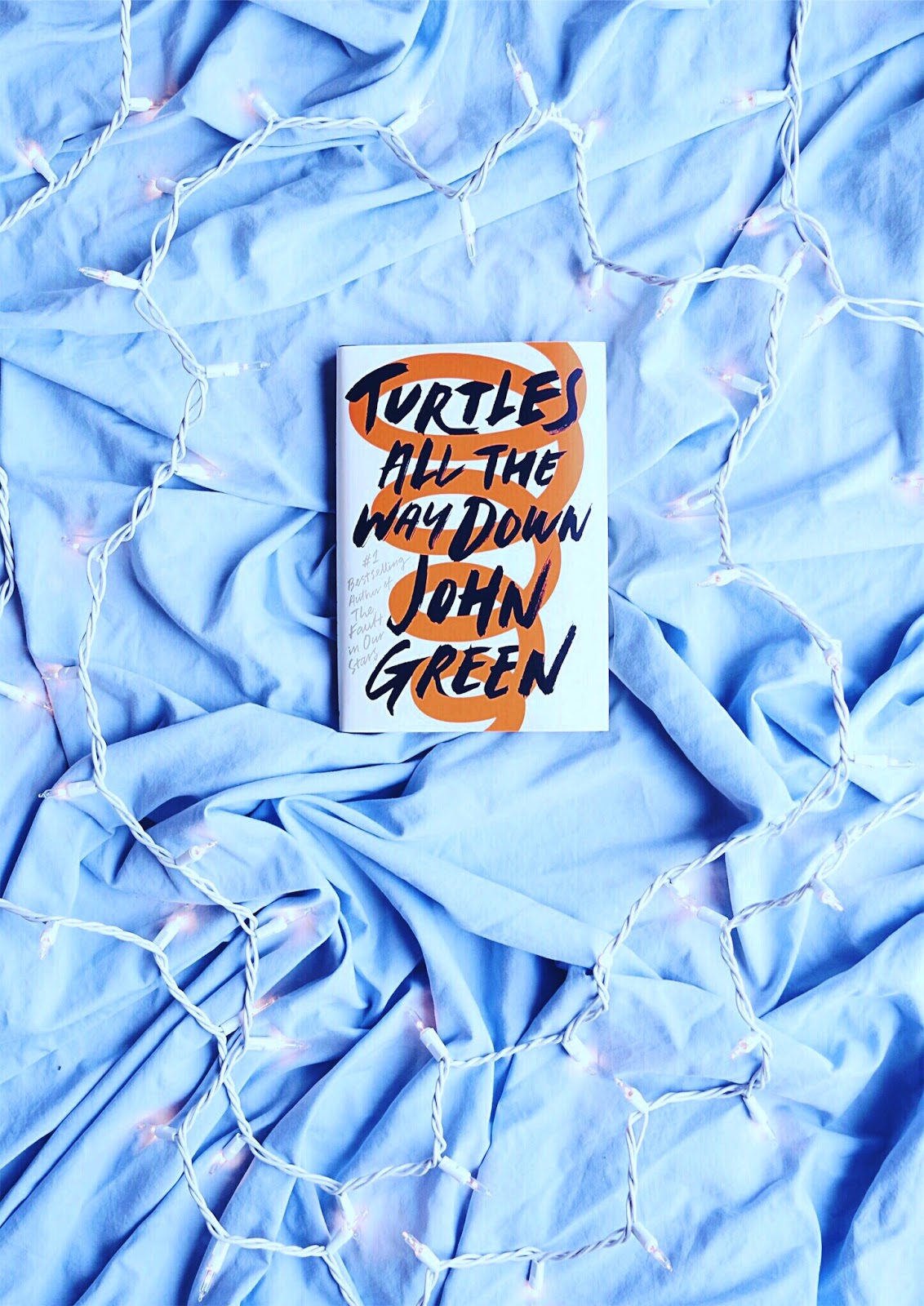
Your Book Doesn't Need a Plot: A Study of Turtles All The Way Down | Olivia J

"It's not what you write; it's the way you write it," Jack Kerouac


"Of course books need plots, Olivia! If you don't have a plot, then you'll just get a sad teenage boy wandering around the streets of New York City for three days, and who wants to read that!"


Yes. I want to read that.

(That was a reference to The Catcher In the Rye. Get on my level.)

Anyway, yes, you heard me correctly. I'm insinuating that your book doesn't need to have a traditionally developed "plot" to be successful.

Who needs plots, anyway? They're overrated.


@olivia.j.the.wordshaker
To scale back, "plot" within a story is defined as 'the sequence of events that affect other events and further the story toward its goal'. Examples: the plot of The Hunger Games is: Katniss's sister, Prim, is reaped, so Katniss volunteers, goes to the Capitol, trains and fights in the Hunger Games, wins with Peeta, and goes home.

What defines this traditional plot is a combination of events that are action-packed (being that something is happening externally) and that they are driven by the main character as well as other outside characters/forces. Both Katniss’s decisions as well as the decisions of others cause clear events in the story, and their reactions cause other events, which affect the development of themes, characters, and the outcome of the story.

However, I'm here to propose that you don't need a plot. You don't need to string all these story beats together and create anything convoluted for the story to be successful.

It really comes down to one thing:

Your book doesn't need a plot. It just needs a point.

I first experienced this with The Catcher In the Rye - my all-time favorite book, by the way. If you try and explain what actually happens in The Catcher In the Rye, it's going to sound like this:

"So, there's this kid named Holden Caulfield, and he flunks out of school, so, in order to kill three days time, he wanders around New York feeling sorry for himself, drinking a lot, and reminiscing about life, and then he takes his sister on a ride on a carousel."

Sounds boring and pointless, right? And to some, it is. However, what The Catcher In the Rye lacks in plot, it makes up for in strong prose, character development, and complex themes and messages.

Today's primary example, however, is Turtles All The Way Down by John Green. This is my most recent read, and I LOVED IT.

However, many complain of its lack of real plot or structure. But the point of the book isn't finding this billionaire, the point is Aza, and the point is the lessons, themes, and messages of the novel. It works because, while the intended external 'plot' takes a backseat to the character development and relationships, every scene in the story still furthers the point of the novel - and not necessarily the plot.

The key difference between the stories with no discernible plot and the stories with one is that the external events in a "plotted" story directly affect the character's - and the story's - overall arc. However, in a story with little-to-no plot, the external events are separate from the story's arc, as seen in Turtles. Often, they are only a catalyst, or are background noise to the front-and-center conflict of the story, which is usually a character/relationship.

The way to make a story with no plot work is that you have to have a strong point. You have to have something very clear and defined that you want to say. Everything has a point. You have to determine the point of your novel, and if the point can more accurately be shown through a plot, then so be it. If not, then, to hell with all writing rules. Everyone knows they're just guidelines anyway.

So, no. You don't need a murder-mystery or a space opera to get across your novel's point. In fact, sometimes it can distract from the heart of your story. Sometimes all it takes is a depressed kid wandering around Manhattan for us to realize how beautiful life is.

~The WordShaker