Showing posts with label author. Show all posts

Saturday, October 13, 2018

Why I haven't been blogging as much... (plus a Casually Homicidal snippet) | Olivia J

"Step into a scene and let it drip from your fingers,"
-MJ Bush


I love this blog. Even if very few people read it, I would still probably write for it. I love the content I produce, I love sharing stuff with you, and I love analyzing literature. This blog is a portfolio of me.

And I hate that I haven’t been able to write on it as consistently as I did during high school. I usually only missed one or two blog posts a year.

And then college happened.

I’ve resorted to being able to write one blog post every two weeks, and that’s iffy. I just don’t want to put out subpar content when I truly don’t have the time - or mental energy - to produce quality content.

It sucks, but that's my life right now. And my content on this blog should reflect my life. Don't worry, I'm working on getting blogging back into my weekly schedule. Literary analysis will be few and far between, but then you might be getting more lifestyle posts.

However, there is another reason why I haven't been blogging as much, and it's a much better excuse than busyness.

Casually Homicidal, the current YA Thriller/Contemporary novel I'm writing, is almost done. Yes, you heard that right. I'm almost done. I've only got five chapters left, and then draft one is done.

But really, it's beautiful. I have fallen irrevocably in love with this story and these characters. I was afraid it was never going to happen again, but here we are. Casually Homicidal has taken over my life, and I'm 100% here for it.

Now, there hasn't really been an official synopsis for Casually Homicidal since I'm still perfecting it, and the only info you guys have gotten is over on Instagram (@olivia.j.the.wordshaker) in the form of collages and snippets.

However, there is a little bit more I can share with you, in the form of a short piece about the themes of Casually Homicidal. And some photos of course.

***


So . . . what is Casually Homicidal even about?

Casually Homicidal is about change, and the insane things we do to stop time.

It’s about being so rejected that all you can manage to do is reject other people.

pic creds to Pinterest
It’s about the secrets we keep and what they drive us to do.


It’s about being so incredibly empty that we don’t even realize we’re filling a void.


It’s about small towns and nostalgia and the wilderness of young adulthood.


pic creds to Pinterest
It’s about pain and the people, memories, and experiences that change us.


It’s about accepting the past and facing the future.


It’s about deciding who you really want to be.


pic creds to Pinterest
Casually Homicidal is about two eighteen-year-olds trying to find out where they fit in a world that wants nothing to do with either of them.


Cue the existential crises, road trips, and bloody murder.


***


And a snippet, just because I'm so generous.


***
“Was I right about you, Hendrix?”

“What?”

“Was I right, that you want to leave too? That you feel this terrible, awful stringing feeling inside, like your stomach is made of a ball of yarn and someone’s just pulling and pulling and pulling at it? Except you’re not sure where they’re pulling it, so the spool just grows smaller and smaller, until one day it’s just going to pop out of you Do you feel that way, too?”

Hendrix pauses. His eyes glaze and go far away - he’s thinking. “Yes.”

His voice strikes me, sharp and metallic. He’s lying, I can feel it right in the core of me. People lie to me all the time. I’ve gotten good at discerning it. “You don’t.”

Hendrix swallows audibly. “Yeah, I do.” It comes out more like a question.

My forehead tenses up. I ought to take him at face value - I really should. I sit up and start to walk over towards him, to see if he’s genuine. If he really means anything he’s saying.

But he turns on his heel and walks away from me, towards his side of the bed.

“We should sleep, Arden. It’s almost 2am.”

My chest splinters as I wander back into bed, swallowed by the soft darkness. I’m sleeping in the same bed as Hendrix, but he feels so far away. And the divide is lined with sinkholes and jagged rocks and fearsome creatures on both sides.

It’s not like he felt any closer when we worked together at that Godforsaken frozen yogurt shop. But us being in this together, it feels like we should be.

Granted, the world should be a lot of things.

But we both know it’s not.
***
Love you all. Thanks for supporting what I love.


~The WordShaker

Saturday, June 9, 2018

"Clutching Roses" - My Gold Medal-Winning Short Story | Olivia J

"I'm not a very good writer, but I'm an excellent rewriter," -James Michener

These 869 words got me to New York. Enjoy.


~

Clutching Roses
Olivia J. Bennett


The man rubs his gray mustache, staring up at the blue sky outside of the grimy window. He brushes some coal dust off of his lunchpail, stepping out of the elevator, rising from the bowels of the earth.
“Have a good evening, Ernest. Tell your wife I said hi!” Carl says, tipping the bill of his hardhat. The light shines into the old man’s eyes for a moment, and he squints back at Carl.
“You too. Hope tomorrow isn’t as rough as today,” Ernest says, not facing the man.
“Anything to serve the masses of this good, God-fearing town,” Carl says, laughing spitefully.
Pushing open the creaky, wooden door, Ernest walks on the gravel road through the fluorescent-lit town. The sun has ripened to orange.
The man walks this path every day. He could do it with his eyes closed. In fact, often, he does, soaking up the smells and sounds of the northwestern settlement. He knows everything about this little town, so much so that he can recognize the women in their patterned dresses smelling of gardenia and lavender, and the men coming home to their wives smelling of sweat and spice.
“Evening, Ernest,” the grocer says from his storefront. “Hope Rose is doing well!”
The friendly voice of the grocer forces the man to open his eyes. “Yes, she is. I’ll let her know you asked.”
On his way out of the town’s main drag, the gravel crunches under his heavy-bottomed boots. The clouds are an explosion of white, purple, and orange, and he finally sees the small, tin-roofed house emerging from the treeline.
Ernest runs his fingers along the bark as the gravel slowly dissipates and becomes a worn, dirt path. The white blooms of baby’s breath line the path, along with the petals of bright yellow and purple wildflowers. Pain creaking through his back, the man leans over to pluck a small daisy from the side of the path. He puts it up to his nose, and smells the sweet, earthy aroma of the flower.
His lungs contract, coughing, and the scent of the flower dies. Now, all he can taste or smell is the coal dust. Still, the man gets down on his knees, and gathers a bouquet of flowers for his wife, Rose. She loves flowers, and Ernest would always tease her about it because her name was a flower, but Ernest knew she loved them because they could brighten any room.
The grainy wood of the house comes into view. The sun glints off of shards of broken glass. Oh, no, the man thought, an animal must have broken the window again.
He runs his fingers over the remaining shards, seeing a small tuft of fur caught on the corner. He wrinkles his leathery face and pushes open the old door. It sticks, as it most often does, and the old man nearly tumbles into his own house. He gazes into the musty home, the evening sun casting thick bands of light onto the floor.
“Good evening, Rose. What have you made for dinner tonight?” Ernest says, like he does every night.
But she doesn’t answer. She just sits there, in her pastel dress, staring at the wilting bouquet of flowers on the table.
Sighing, Ernest sets down his lunch pail and turns on the generator under the sink. Small lamps on the walls flick on and the gray refrigerator hums to life. A small floor fan blows dry, brown leaves around the floor.
“Carl asked about you again. I think he’s got a thing for you, even though he’s got his own wife and kids to look after.”
Ernest scrapes out something from a corroded pot and fills it with water. In goes the cabbage, carrots, and roast beef. With a click, he turns on the gas stove.
“The grocer asked about you, too, old William, who used to be our neighbor. He’s a nice man - grows the sweetest corn in the county if I’ve ever seen it.” Suddenly, Ernest turns around to face his wife, who still hasn’t acknowledged him. “You miss him, don’t you? I’ll bet you miss a lot of the nice men in this town . . .”
Ernest suddenly hears a scratching, gnawing sound. Nearly dropping his wooden spoon, he moves over to the leg of the crooked wooden table. A racoon gnaws on his wife’s anke.
Aghast, Ernest cries, “shoo! Shoo! Get on out of my house, filthy animal!” The old man chases the vermin out of his house, suddenly sweaty and out of breath.
His pot is boiling over, too, so he brings it over and sets it down on the table, already perfectly set for a dinner for two. Finally, Ernest takes the bouquet for his wife and begins plucking out the fresh, aromatic flowers. The larger bundle he places within her gnarled, bony fingers. Several strands of baby’s breath go between her meaty ribs and collarbones, and finally, the last two daisies, a lively white and yellow, he places in his wife’s two hollow eye sockets.

“There,” the old man says, slowly sinking back down into his chair. He unfolds his napkin and places it on his lap. “Now you’re truly dressed for dinner, Rose.”


~

*mic drop*

~The WordShaker

Saturday, May 19, 2018

New Novels, Living Life, and Endings

"Stay faithful to the stories in your head," -Paula Hawkins

I think I've been really slacking on these analysis posts, guys. While I love them, they do take a lot of work - a.k.a. a lot of time and effort that I just haven't had lately. 

However, a lot of things have happened in my life that are definitely worth noting.

First off, being that I started a new novel! You may know this if you follow me on Instagram, because I've posted several hints as to what it is - 

- and unfortunately this is not the place nor the time at which I'm going to tell you what my current WIP is about. All I'll reveal is the title: 

Casually Homicidal

And an aesthetic collage to satisfy the masses:


Alas, some changes have been rolling through my Instagram - I've changed my theme! The blue sheet is gone, and now every photo will be taken in front of or around my bookshelf!

Unfortunately, Casually Homicidal is moving at a snail's pace - which is better than not at all. But I've realized that I have two settings: living and writing. I can't really seem to do both. 

My life goes through phases - either I'm out living my life to the fullest, having new and different experiences, or I'm neck deep in a story. And when I try and do both, both aspects suffer. It's a bit frustrating because I feel . . . incomplete if I'm not working on a story. 

I've got a sign in my room that says "live for the moments you can't put into words". I've been trying to live by that. If I don't live my life, how will I have anything to write about?

Speaking of life, I graduated high school. 

I suppose the weight of that speaks for itself. If you saw the post I made this past Tuesday, then this might be some recap. 

But really, overall, I just feel . . . conflicted. Part excited and part so incredibly done but also a lot sad. Yeah, mostly sad. 

It's a surreal feeling really, how much my life is going to change. A lot of lasts have happened in the past few weeks, and just having that itching and clawing at the back of mind makes everything a shade grayer. 

I've been reflecting on, I guess, how I started high school, what place I was in, and now how I'm leaving high school. 

When I started high school in 2014 I wanted to die. Sorry for the bluntness - might as well get it out of the way now. But really, I suffered from really bad anxiety and depression from about 2013-2015. I still struggle with anxiety, but it's nowhere near as bad. But truly, for a long time, I was nothing but a well of unending pain. 

Fast forward four years, and here I am. Better than ever, with a published novel, amazing friends, and . . . a bright future. That sounds sappy, but trust me, it's true. I'm not the person I was four years ago, which, by all accounts, is a good thing. 

So, I guess there's not really a point to that story other than reflecting on what these four years have done to me and what they've given me. Reflecting back on who I've been, so I can know who I'll become. 


And I also want to say thank you. 

I don't really feel like listing anyone, because I know I'll forget someone and then I'll feel bad.

Alas. Thank you for changing me. Thank you for being there for me. Thank you for giving me a home. Thank you for the memories. Thank you for the heartache. 

For it all has made me who I am. 

~The WordShaker

Saturday, April 14, 2018

Gendered Prose: A Study of "A List of Cages"

"Writing is easy. All you have to do is cross out the wrong words," - Mark Twain

Man, I'm just whipping out these analysis posts like there's no tomorrow . . .

Anyway, my current read is A List of Cages by Robin Roe, and I'm about halfway through it. 

However, what I have read got me thinking. A List of Cages features two male protagonists - a senior and a freshman in high school - written by an adult female. And as I was reading, something just didn't feel . . . right. 

If you're not an avid reader, then you might not know what I mean when I say a character "doesn't sound like a guy" or "doesn't sound like a girl" - like, of course they don't, they're just black and white letters on a page; or, men and women don't 'sound' a certain way when written. 

However, in true Olivia fashion, I'm about to lay out some literary truth on you . . . 

Gendered prose is a thing. 

First, of course, we need to define what I mean by 'gendered prose'. (This more specifically applies to male writers writing female characters or female writers writing male characters.) 

Gendered prose is when the character in question has thoughts, actions, feelings, and syntax that aligns with their gender. In short, when read within the context of the story, the character 'sounds female' or 'sounds male'. Which, when stated like that, sounds stereotypical. 

However, as a general rule of thumb, men and women are different. Not only are they biologically different, their brains are wired differently, men and women react to certain situations differently, the list goes on. 

Now, don't misconstrue any of this and assume that I mean every male character should respond to X stimuli the same way, or that female characters have to be dreamy flower-children, etc. What this means is that, at the most elementary level of the character, their gender has to factor into their identity, and subsequently their thoughts and actions. This involves understanding men and women - and their differences - on a biological and sociological level. 

Why is this important? Why can't we just write people, and then figure out their gender later? 

As I've just stated, whether you like it or not, gender/sex is a cornerstone in a person's biology and identity. Therefore, it will influence them as a whole person. However, it's important for a character to 'sound' like a certain gender for this one reason:

Having a male character read as male is important for the reader being able to visualize and connect with the character, both physically and mentally, for the character to accurately gel together in the reader's mind. If this aspect of the prose fails, then there will be a disconnect between what the prose states and what the prose unintentionally implies. 

Now, the real question is what makes the prose and a character sound 'male' or 'female'? 

That's a good question, and I'm not entirely sure I have a concrete answer. This is the dilemma I found myself in with A List of Cages. Something didn't feel right and I knew what it was, but I couldn't understand why. 

However, after a discussion post on Instagram (@olivia.j.the.wordshaker) and doing some further digging, I've realized that it comes down to a couple of things. If not, at least use this as a brainstorming place in improving your ability to write the opposite gender. 

1. Emotions

This is a big one. As a general rule, women are more outwardly emotional than men. Women also respond to stress and conflict differently than men do. Include descriptions of distinctly different physical and emotional reactions to stimuli. 

2. Interactions 

The way men interact with other men, the way women interact with other women, and the way men and women act together are three vastly different wheelhouses. 

3. Style/Syntax

This pertains to the actual words used to describe something, and the framing and structure of the sentences. Men tend to get right to the point, while women tend to be a bit more metaphorical and flowery. 


~

This is by no means a comprehensive list, and I suppose the takeaway from all of this is do your own research! Find out the differences, and work our your own way to write the opposite gender in the way that best fits the character and you as a writer. 

Again, take these tips with a grain of salt and avoid being stereotypical. Create your character and sprinkle these on like the sprinkles on top of a cupcake!

~The WordShaker

Saturday, March 24, 2018

Guest Post: Creating Strong Characters by Gabriella Slade

"Readers are not sheep, and not every pen tempts them," -Vladimir Nabokov

We all love a strong character.


That's a fact. We as readers love the ability to pick up a book and fall in love with a person who exists only between the pages of a book. As a writer, it's our job, to not only create a compelling story that pulls a reader in but to write about strong, well-developed characters for people to read about.


If a reader doesn't like the character they're reading about, they'll most likely put down the story. It's as simple as that.


When I sent off my own book, Show Me, to be read by beta readers, much of the feedback I received said my main character, Kade, was not very likable. He was moody, and dark, and needed a lighter side of his personality to balance him out. It surprised me, but I knew the changes needed to be made, so I went back to the drawing board and took some more time to get to know my character.


What are some of the things that make a character strong?
  • A backstory that is well developed throughout the course of the book/series
  • Both Positive AND negative traits
  • Quirks and Hobbies
  • Things he/she believes in
  • Passions
  • Dreams or plans for the future
  • Fears


Granted, that's a lot, so here are some questions used to develop these things even further than just a boring old bullet list.
  1. Who were his parents? Were they present throughout his childhood? Where are they today?
  2. What was his education like?
  3. What does he like to do for fun?
  4. What are some of his good and bad habits?
  5. Is he religious?
  6. What does he dream about doing one day?
  7. What is he scared of?
  8. Does he have any secrets?


OK, this is just yet another boring list, but it's also the starting point to getting to know your character even better.


When I dove back into Kade's development, I made sure to give him interests that weren't put there simply for the sake of the plot. I balanced out his darker, moody side by giving him a sense of humor, and made him less negative about every single little issue in his life. Sure he is still moody. He does tend to complain at times. But that's just because he's flawed.


A strong character is more an imperfect character, rather than a perfect one.


Maybe you're on the other side of the spectrum. Maybe you tried so hard to make your character good, that he is practically perfect. No imperfections. No fears. Unfortunately, that's just unrealistic and very unrelatable. Like it or not, you need to give your characters some spots. Does he take all his anger out on his family or friends? Does he blame other people for his mistakes? Does he lie, cheat or steal?


Just remember: Don't make the same mistake I did by making your character too unlikable because then you'll be in the same boat as I was.


You'll most likely spend a lot of time developing your characters throughout the writing and editing of your story. If you happen to be writing a series like I am, you'll have even more time to get to know your character. You'll also have the amazing opportunity to get to watch them grow. Maybe they'll mend some of their old flaws, and build new ones.


In the end, there will probably almost always be something you won't know about your character. But that's OK. Take the time, however, to learn about your characters, because if you don't know about your character, how will your readers?

~


Gabriella Slade is the author of the upcoming fantasy novel, Show Me. You can find her on Instagram @soulquestersaga, and on her website at gabriellaslade.com

Thanks for joining us, Gabriella! I hoped you learned something from her!

~The WordShaker

Saturday, March 10, 2018

A Writer's Love Letter to Theater | Olivia J

"Theater is the most immediate way in which another human being can share with another the sense of what it is to be a human being," -Oscar Wilde

There has never been a time where I don't remember being on stage. If it wasn't theater, it was dance. When I quit dance sometime in elementary school, I started theater in fifth grade, and it's been a part of my life ever since. The thing is: I don't know if theater is going to continue to be a part of my life beyond high school.

And so we find ourselves, nearly a decade later. This Saturday was my last show at Washington. I've made lifelong friends and forever memories. I'm feeling a whirlwind of everything, and so, I did what only I knew how do. I wrote about it. 


~

Dear WCHS Theater Department,

Thank you for making this place a home away from home. Sometimes my creative cave can be a little lonely, even when I do connect with other writers/artists. But you guys are loud and bright and crazy and full of love and sometimes it's everything I need on bad days. Thank you for accepting me even though I'm not pursuing a career in this field, even though I'm not 'like you'. 

What I really want to say is that I'm going to miss this. I'm going to miss the bleary-eyed trips to Steak 'n Shake. I'm going to miss the writhing of nerves in the dimly lit wings, but the solace of knowing that we're all feeling the same thing. I'm going to miss gambling for Oreos in the scene shop. I'm going to miss that terrible, duct taped couch and that marma-laaaawwwhhd warm-up and the memes we made of ourselves and taped on the walls of the dressing rooms. I'm going to miss this whole experience more than anything about high school, and it breaks my heart that this period of my life is over. 

But hey, maybe this experience will show up in one of my books someday, in flashes of characters and subplots, or little puzzles pieces painting a picture of life and art and the feeling of being free. Maybe I'll write about all of you. That way, I can immortalize this. I'll freeze these moments in time for us to experience and re-experience all over again - the good, the bad, the ugly, and the absolutely amazing. 

Maybe then, I won't miss it so much. But then again, I think those are the best things to write about. 

With bittersweet love,

~The WordShaker

Saturday, March 3, 2018

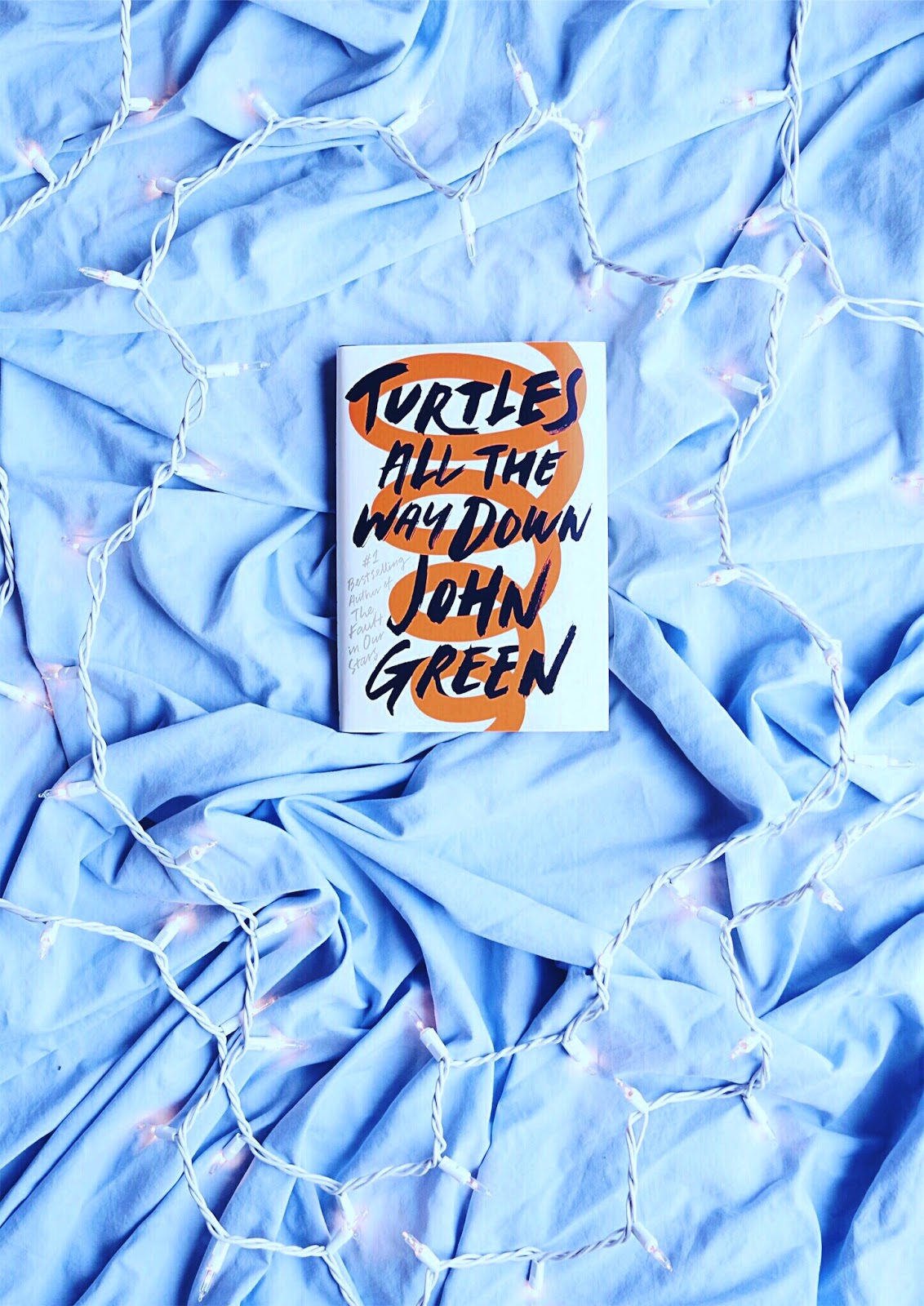
Your Book Doesn't Need a Plot: A Study of Turtles All The Way Down | Olivia J

"It's not what you write; it's the way you write it," Jack Kerouac


"Of course books need plots, Olivia! If you don't have a plot, then you'll just get a sad teenage boy wandering around the streets of New York City for three days, and who wants to read that!"


Yes. I want to read that.

(That was a reference to The Catcher In the Rye. Get on my level.)

Anyway, yes, you heard me correctly. I'm insinuating that your book doesn't need to have a traditionally developed "plot" to be successful.

Who needs plots, anyway? They're overrated.


@olivia.j.the.wordshaker
To scale back, "plot" within a story is defined as 'the sequence of events that affect other events and further the story toward its goal'. Examples: the plot of The Hunger Games is: Katniss's sister, Prim, is reaped, so Katniss volunteers, goes to the Capitol, trains and fights in the Hunger Games, wins with Peeta, and goes home.

What defines this traditional plot is a combination of events that are action-packed (being that something is happening externally) and that they are driven by the main character as well as other outside characters/forces. Both Katniss’s decisions as well as the decisions of others cause clear events in the story, and their reactions cause other events, which affect the development of themes, characters, and the outcome of the story.

However, I'm here to propose that you don't need a plot. You don't need to string all these story beats together and create anything convoluted for the story to be successful.

It really comes down to one thing:

Your book doesn't need a plot. It just needs a point.

I first experienced this with The Catcher In the Rye - my all-time favorite book, by the way. If you try and explain what actually happens in The Catcher In the Rye, it's going to sound like this:

"So, there's this kid named Holden Caulfield, and he flunks out of school, so, in order to kill three days time, he wanders around New York feeling sorry for himself, drinking a lot, and reminiscing about life, and then he takes his sister on a ride on a carousel."

Sounds boring and pointless, right? And to some, it is. However, what The Catcher In the Rye lacks in plot, it makes up for in strong prose, character development, and complex themes and messages.

Today's primary example, however, is Turtles All The Way Down by John Green. This is my most recent read, and I LOVED IT.

However, many complain of its lack of real plot or structure. But the point of the book isn't finding this billionaire, the point is Aza, and the point is the lessons, themes, and messages of the novel. It works because, while the intended external 'plot' takes a backseat to the character development and relationships, every scene in the story still furthers the point of the novel - and not necessarily the plot.

The key difference between the stories with no discernible plot and the stories with one is that the external events in a "plotted" story directly affect the character's - and the story's - overall arc. However, in a story with little-to-no plot, the external events are separate from the story's arc, as seen in Turtles. Often, they are only a catalyst, or are background noise to the front-and-center conflict of the story, which is usually a character/relationship.

The way to make a story with no plot work is that you have to have a strong point. You have to have something very clear and defined that you want to say. Everything has a point. You have to determine the point of your novel, and if the point can more accurately be shown through a plot, then so be it. If not, then, to hell with all writing rules. Everyone knows they're just guidelines anyway.

So, no. You don't need a murder-mystery or a space opera to get across your novel's point. In fact, sometimes it can distract from the heart of your story. Sometimes all it takes is a depressed kid wandering around Manhattan for us to realize how beautiful life is.

~The WordShaker