Showing posts with label books. Show all posts

Saturday, August 18, 2018

"Inaccurate Portrayal of Mental Illness" - Debunking the Myth | Olivia J

"An idea that is not dangerous is unworthy of being called an idea at all," -Oscar Wilde

"(in)accurate portrayal of mental illness"

That phrase gets thrown around a hell of a lot these days. 

And I'm sick of people abusing it. 

Phrases like this get thrown around concerning shows like 13 Reasons Why, and basically any other form of art that involves a story. However, it is grossly and inherently problematic because it assumes something extraordinarily harmful about mental illness itself:  that mental illness is homogenous. 

I think that most of us can agree that 13 Reasons Why is not a good show. The writing is poor, the characters are inconsistent, and the depiction of suicide is harmful. 

Now before you all light your torches and call me a hypocrite, let me establish:  there is a wrong way to portray mental illness, but there is not one single way to portray mental illness. 

Let me explain. Portraying mental illness incorrectly involves assigning inaccurate or inconsistent symptoms to a mental illness, perpetuating harmful or incorrect stereotypes and stigma around mental illness, and not portraying mental illness as something that is treatable. Basically, the wrong way of portraying mental illness is spreading inaccurate information. Most other things are up for debate.

The tricky part is that many people - including myself - found 13 Reasons Why as a very harmful and inaccurate portrayal of mental illness (I'm looking at you, producers-entirely-ignoring-the-advice-from-a-psychiatric-board). It idealizes the fallout from suicide, spinning it out to be revenge instead of untreated mental illness. It blames suicide on everyone else instead of Hannah Baker. It never puts a quantifier on mental illness, and paints an utterly hopeless picture of the topics it explores. 

However, I've spoken with many people who have identified with the bullying and social aspects of 13 Reasons Why. And who am I to invalidate their feelings and experiences? Despite that the myrad of reasons why 13 Reasons Why falls flat on its face, bullying can contribute to mental illness, and if 13 Reasons Why resonated with someone - if someone saw themselves in 13 Reasons Why and they felt it was an accurate portrayal of their struggles with bullying and mental illness - then I have no right to tell them any differently. Because guess what?

There's no one single way to have a mental illness. 

From depression, anxiety, and trauma, to schizophrenia, disassociative identity disorder, and eating/substance abuse disorders, everyone experiences mental illness differently. My PTSD doesn't look like your PTSD. My friend's depression doesn't look like my family member's depression. Portrayals and/or content that one person finds harmful or triggering may not bother or affect another. 

To claim that your experience of mental illness is the correct or only experience and that your experience of mental illness ought to be the only one portrayed in media is unbelievably selfish and insensitive to the millions of other people who experience mental illness differently than you.

Truthfully, this is partially a call-out post to myself, because I've claimed that 13 Reasons Why isn't an accurate portrayal of mental illness, because it's not. For me. However, I'm retracting that statement to some degree because I know it resonates with some people, and I don't want to invalidate them. I'm not perfect, and I continue to evolve and grow as an artist, a consumer, and a critic. 

However, next time you're tempted to call a piece of media an 'inaccurate portrayal of mental illness', consider whether it is literally a factually incorrect and harmful portrayal, or whether it just doesn't align with your experiences and therefore you personally can't relate to it. 

Because nine times out of ten, there's someone out there who can relate to it, and they shouldn't be robbed of the experience of being profoundly impacted and deeply understood by storytelling. Nobody should. 

~The WordShaker
Saturday, April 14, 2018

Gendered Prose: A Study of "A List of Cages"

"Writing is easy. All you have to do is cross out the wrong words," - Mark Twain

Man, I'm just whipping out these analysis posts like there's no tomorrow . . .

Anyway, my current read is A List of Cages by Robin Roe, and I'm about halfway through it. 

However, what I have read got me thinking. A List of Cages features two male protagonists - a senior and a freshman in high school - written by an adult female. And as I was reading, something just didn't feel . . . right. 

If you're not an avid reader, then you might not know what I mean when I say a character "doesn't sound like a guy" or "doesn't sound like a girl" - like, of course they don't, they're just black and white letters on a page; or, men and women don't 'sound' a certain way when written. 

However, in true Olivia fashion, I'm about to lay out some literary truth on you . . . 

Gendered prose is a thing. 

First, of course, we need to define what I mean by 'gendered prose'. (This more specifically applies to male writers writing female characters or female writers writing male characters.) 

Gendered prose is when the character in question has thoughts, actions, feelings, and syntax that aligns with their gender. In short, when read within the context of the story, the character 'sounds female' or 'sounds male'. Which, when stated like that, sounds stereotypical. 

However, as a general rule of thumb, men and women are different. Not only are they biologically different, their brains are wired differently, men and women react to certain situations differently, the list goes on. 

Now, don't misconstrue any of this and assume that I mean every male character should respond to X stimuli the same way, or that female characters have to be dreamy flower-children, etc. What this means is that, at the most elementary level of the character, their gender has to factor into their identity, and subsequently their thoughts and actions. This involves understanding men and women - and their differences - on a biological and sociological level. 

Why is this important? Why can't we just write people, and then figure out their gender later? 

As I've just stated, whether you like it or not, gender/sex is a cornerstone in a person's biology and identity. Therefore, it will influence them as a whole person. However, it's important for a character to 'sound' like a certain gender for this one reason:

Having a male character read as male is important for the reader being able to visualize and connect with the character, both physically and mentally, for the character to accurately gel together in the reader's mind. If this aspect of the prose fails, then there will be a disconnect between what the prose states and what the prose unintentionally implies. 

Now, the real question is what makes the prose and a character sound 'male' or 'female'? 

That's a good question, and I'm not entirely sure I have a concrete answer. This is the dilemma I found myself in with A List of Cages. Something didn't feel right and I knew what it was, but I couldn't understand why. 

However, after a discussion post on Instagram (@olivia.j.the.wordshaker) and doing some further digging, I've realized that it comes down to a couple of things. If not, at least use this as a brainstorming place in improving your ability to write the opposite gender. 

1. Emotions

This is a big one. As a general rule, women are more outwardly emotional than men. Women also respond to stress and conflict differently than men do. Include descriptions of distinctly different physical and emotional reactions to stimuli. 

2. Interactions 

The way men interact with other men, the way women interact with other women, and the way men and women act together are three vastly different wheelhouses. 

3. Style/Syntax

This pertains to the actual words used to describe something, and the framing and structure of the sentences. Men tend to get right to the point, while women tend to be a bit more metaphorical and flowery. 


~

This is by no means a comprehensive list, and I suppose the takeaway from all of this is do your own research! Find out the differences, and work our your own way to write the opposite gender in the way that best fits the character and you as a writer. 

Again, take these tips with a grain of salt and avoid being stereotypical. Create your character and sprinkle these on like the sprinkles on top of a cupcake!

~The WordShaker

Saturday, March 10, 2018

A Writer's Love Letter to Theater | Olivia J

"Theater is the most immediate way in which another human being can share with another the sense of what it is to be a human being," -Oscar Wilde

There has never been a time where I don't remember being on stage. If it wasn't theater, it was dance. When I quit dance sometime in elementary school, I started theater in fifth grade, and it's been a part of my life ever since. The thing is: I don't know if theater is going to continue to be a part of my life beyond high school.

And so we find ourselves, nearly a decade later. This Saturday was my last show at Washington. I've made lifelong friends and forever memories. I'm feeling a whirlwind of everything, and so, I did what only I knew how do. I wrote about it. 


~

Dear WCHS Theater Department,

Thank you for making this place a home away from home. Sometimes my creative cave can be a little lonely, even when I do connect with other writers/artists. But you guys are loud and bright and crazy and full of love and sometimes it's everything I need on bad days. Thank you for accepting me even though I'm not pursuing a career in this field, even though I'm not 'like you'. 

What I really want to say is that I'm going to miss this. I'm going to miss the bleary-eyed trips to Steak 'n Shake. I'm going to miss the writhing of nerves in the dimly lit wings, but the solace of knowing that we're all feeling the same thing. I'm going to miss gambling for Oreos in the scene shop. I'm going to miss that terrible, duct taped couch and that marma-laaaawwwhhd warm-up and the memes we made of ourselves and taped on the walls of the dressing rooms. I'm going to miss this whole experience more than anything about high school, and it breaks my heart that this period of my life is over. 

But hey, maybe this experience will show up in one of my books someday, in flashes of characters and subplots, or little puzzles pieces painting a picture of life and art and the feeling of being free. Maybe I'll write about all of you. That way, I can immortalize this. I'll freeze these moments in time for us to experience and re-experience all over again - the good, the bad, the ugly, and the absolutely amazing. 

Maybe then, I won't miss it so much. But then again, I think those are the best things to write about. 

With bittersweet love,

~The WordShaker

Saturday, March 3, 2018

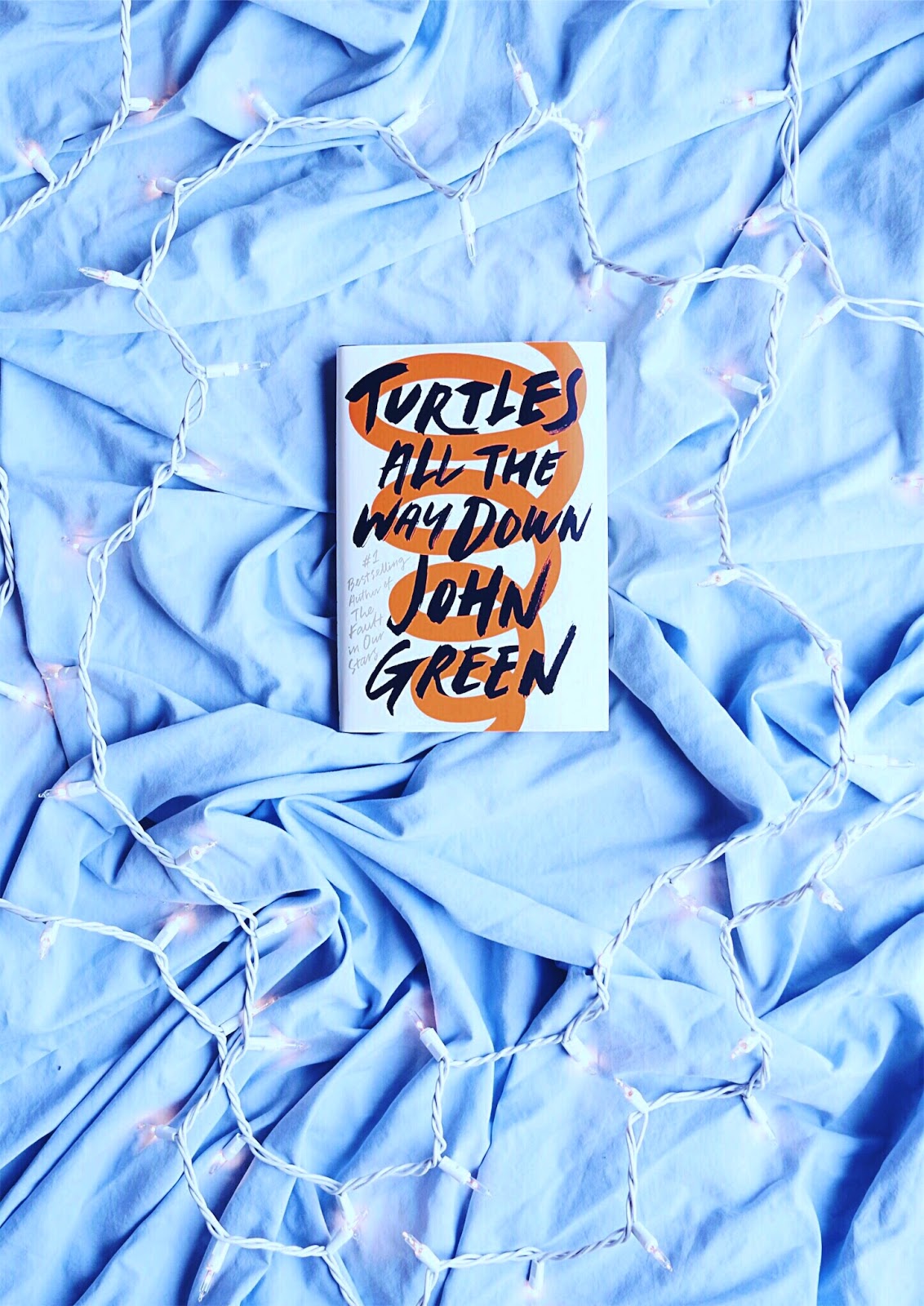
Your Book Doesn't Need a Plot: A Study of Turtles All The Way Down | Olivia J

"It's not what you write; it's the way you write it," Jack Kerouac


"Of course books need plots, Olivia! If you don't have a plot, then you'll just get a sad teenage boy wandering around the streets of New York City for three days, and who wants to read that!"


Yes. I want to read that.

(That was a reference to The Catcher In the Rye. Get on my level.)

Anyway, yes, you heard me correctly. I'm insinuating that your book doesn't need to have a traditionally developed "plot" to be successful.

Who needs plots, anyway? They're overrated.


@olivia.j.the.wordshaker
To scale back, "plot" within a story is defined as 'the sequence of events that affect other events and further the story toward its goal'. Examples: the plot of The Hunger Games is: Katniss's sister, Prim, is reaped, so Katniss volunteers, goes to the Capitol, trains and fights in the Hunger Games, wins with Peeta, and goes home.

What defines this traditional plot is a combination of events that are action-packed (being that something is happening externally) and that they are driven by the main character as well as other outside characters/forces. Both Katniss’s decisions as well as the decisions of others cause clear events in the story, and their reactions cause other events, which affect the development of themes, characters, and the outcome of the story.

However, I'm here to propose that you don't need a plot. You don't need to string all these story beats together and create anything convoluted for the story to be successful.

It really comes down to one thing:

Your book doesn't need a plot. It just needs a point.

I first experienced this with The Catcher In the Rye - my all-time favorite book, by the way. If you try and explain what actually happens in The Catcher In the Rye, it's going to sound like this:

"So, there's this kid named Holden Caulfield, and he flunks out of school, so, in order to kill three days time, he wanders around New York feeling sorry for himself, drinking a lot, and reminiscing about life, and then he takes his sister on a ride on a carousel."

Sounds boring and pointless, right? And to some, it is. However, what The Catcher In the Rye lacks in plot, it makes up for in strong prose, character development, and complex themes and messages.

Today's primary example, however, is Turtles All The Way Down by John Green. This is my most recent read, and I LOVED IT.

However, many complain of its lack of real plot or structure. But the point of the book isn't finding this billionaire, the point is Aza, and the point is the lessons, themes, and messages of the novel. It works because, while the intended external 'plot' takes a backseat to the character development and relationships, every scene in the story still furthers the point of the novel - and not necessarily the plot.

The key difference between the stories with no discernible plot and the stories with one is that the external events in a "plotted" story directly affect the character's - and the story's - overall arc. However, in a story with little-to-no plot, the external events are separate from the story's arc, as seen in Turtles. Often, they are only a catalyst, or are background noise to the front-and-center conflict of the story, which is usually a character/relationship.

The way to make a story with no plot work is that you have to have a strong point. You have to have something very clear and defined that you want to say. Everything has a point. You have to determine the point of your novel, and if the point can more accurately be shown through a plot, then so be it. If not, then, to hell with all writing rules. Everyone knows they're just guidelines anyway.

So, no. You don't need a murder-mystery or a space opera to get across your novel's point. In fact, sometimes it can distract from the heart of your story. Sometimes all it takes is a depressed kid wandering around Manhattan for us to realize how beautiful life is.

~The WordShaker

Saturday, February 10, 2018

Book Review: Wings by Olivia Faye Scott | Olivia J

"The art of writing is the art of discovering what you believe," -Gustave Flaubert

Whoa! What is this? Another book review on another amazing indie author?

Hell yes. 


follow me on Instagram @olivia.j.the.wordshaker

Disclaimer: I was sent this novel in exchange for an honest review.


As if being a teenage girl wasn’t hard enough already, Isabelle Parke has a significant other burden on her shoulders. Ever since a car crash killed both of Isabelle’s parents and sister, she has been struggling with Post Traumatic Stress Disorder, ‘friends’ who don’t stop talking about the fateful Accident, plummeting grades, a (stupid) therapist and a cranky adoptive aunt.


So when Isabelle finds a guardian angel sitting in her bedroom, she just assumes he’s another one of the side effects from the Accident. The angel introduces himself as Jophiel, assigned by God to help Isabelle accept and get over what happened to her. Again, totally PTSD. However, Jophiel begins doing things that no figment of imagination can: picking out tasteful outfits, bantering with Isabelle, and actually helping her when others cannot. Isabelle comes to realize that whether Jophiel is actually her guardian angel or she really is crazy, her life will never be the same.

~

You all know the drill!

Spoilers, duh.

The Bad

1. Nitpicks

First off, this book was fantastic, and all of the bad things I'm going to say about it are nitpicks. But I nitpick them so the author can see these and learn to make her work absolutely perfect. Because it's damn near there.

There was some unneeded description of menial tasks. Things that could have been described in two sentences were entire pages long. Transitions were also a bit slow. Sometimes I got to the end of a bit and thought - wait, what was the point of that dialogue? or - wait, what was the point of Scott showing X-character doing this? Just a small thing, but it would have tightened the prose up a bit.

My second nitpick is that the theme of Isabelle 'needing someone to blame' for the accident was underdeveloped. In retrospect, it made sense because her needing someone to blame is a natural, human reaction. However, it wasn't hit hard enough, since that ended up being the climax of the book.

If Scott had woven in themes of Isabelle's discontent with not having someone to blame, and showed her blaming other people - and herself - more, the big emotional moment of Jophiel revealing to her that he was the driver would have been a moment of astounding clarity and heartbreak. Now, the moment didn't fall entirely flat, but Scott could have taken it up a notch and tied the whole story together.

I think this last nitpick comes from Isabelle not being entirely aware that she has to change. No one can truly change unless they admit that they need help, that they need to change. If she was more aware of her dysfunction, but didn't exactly know how to change or didn't believe she could, then her whole arc and especially the climax would have absolutely knocked me out of the park.

It sure as hell came close to, though.

The writing was a bit juvenile but perfectly functional. It also worked with the context and tone of the story. I suppose my apt towards purple prose is a personal preference.

Some things were a bit cliche, but the cliches didn't fall flat. Cliche isn't really a bad thing. It would only have been a bad thing if it was poorly written or the cliches felt contrived or just didn't work, which certainly wasn't the case for Wings.

The Good

1. The Characters

Oh my goodness. I absolutely adored the characters in this book.

Jophiel and Isabelle were fantastic together. Their humor and relationship dynamic was beautiful, and I felt all of it. I even believed that they were in love even after a short amount of time. I just . . . wow. Even writing this, I think back to how they helped each other and just smile. It was all so beautiful and perfect. They were so broken, but they worked so well together. I'm a sucker for good character arcs, and this sure did hit the spot.

I also liked Isabelle's family dynamic with her aunt and cousins. They each had distinct personalities, and I loved how their relationship with Isabelle changed over the course of the book. The whole dynamic between them felt so . . . real. Loving, yet distant. Accepting, but unsure. I liked that the family wasn't vilified or patronized.

I just, gosh. I loved this book.

2. The Plot

Now, this part might be entirely biased because I just adore stories like this. The plot of Wings is simple. Angel comes to Isabelle to help her work through her problems. Angel inevitably has problems of his own. Healing and fun stuff and character development.

But it works so well because Scott's writing along with the deeply flawed and likable characters creates an incredibly realistic and heartfelt world. You can't help but love Isabelle and Jophiel. You can't help but tear up at the sad parts, and laugh and the witty dialogue.

I'm such a sucker for stories of personal change and healing, and Scott has crafted a simple yet exquisite story of pain, loss, love, life, and friendship.

And I adore it.

3. Pretty Much Everything

I loved the integration of faith. It wasn't overly preachy, but worked within the context of the story. This is about angels, after all. I loved how in tune Scott seemed to be with teenagers, and how high school works.

Just, the emotional dynamics, the characters, the arcs. I hate to sound repetitive, but pretty much everything in this book was a success.

Objective Rating: 8/10
Enjoyment Level: 9.5/10


~

Wings will be finding its way onto my favorites shelf. Thank you, Olivia Faye Scott for writing an amazing book. Oh, and thanks for sending it to me, too.

~The WordShaker

Saturday, February 3, 2018

Book Review: Control Freakz by Michael Evans | Olivia J

“Writing is a gift to yourself, and it’s a gift of giving a story to someone else,” -Amy Tan


This is my second indie book review, and I’m finding that I quite like it! Contact me on Instagram at @olivia.j.the.wordshaker or through my email at oliviajthewordshaker@gmail.com for review requests.


Follow Michael Evans on Instagram @mevansinked
Disclaimer: I was sent this novel in exchange for an honest review.


Alone. Abandoned. Threatened. Natalie has lost all hope for a better future. Everything she’s known and everyone she’s ever loved is gone, and it’s up to her to get her old life back. In Michael Evans’s first novel, Control Freakz, Natalie’s journey toward a better life begins.


When Protocol 00 is enacted, Natalie’s family is taken by the government, along with the families of her two best friends, Ethan and Hunter. With nothing to lose, and the threat of government hitmen kidnapping them at any moment, the three must battle to survive in a horrid, post-apocalyptic world run by President Ash and his invasive government. They want answers. And they’re willing to jeopardize everything in desperate pursuit.


Risking ruthless leaders, attempted mind control, and her very existence on the planet, Natalie, along with Hunter and Ethan, will stop at nothing in their quest to regain everything they’ve ever known. Her spirits crushed and her will to live destroyed, Natalie knows everything is dead and gone, and soon she will be, too.


Memories connect us to the past, and can often cause us to long for a better future, but they can drive our minds into a state of hell if a better future is unattainable. Nevertheless, Natalie’s hope for a better a future remains.


~


This was the first science fiction dystopian novel that I’d read in a long time, and it was really refreshing. Control Freaks takes the dystopian tropes and stereotypes and subverts them, and makes them a bit more digestible for an audience that’s sick of the same old dystopia.


As usual, we’ll start of with The Bad.

Spoilers, duh.


The Bad

1. The Writing

This one’s a hard one, because some of the writing was fantastic. At times, the description of emotions was heartbreaking and raw. But other times, it was excessive and long.

Emotional dynamics in a story is the level at which the emotions fluctuate. Control Freakz has very little emotional dynamics, and sometimes this makes for an exhausting read. Going back to the emotional descriptions, Evans’s descriptions of emotions go around and around, and, to an extent, it’s effective because it energizes the novel with a constant sense of anxiety. However, Evans takes it a bit too overboard and the novel ends up having just one, monotonous emotional feeling. There should have been moments of tension and release, moments of humor, moments of wit, and moments of numbness, all on top of the sense of constant anxiety that Natalie feels. With just some cuts of emotional description and additions of variety in emotions, Control Freakz could have been an intensely emotional and complex novel, but it barely missed the mark.

Another critique of the writing style was the inclusion of sequels. Sequels, in this case, are the italicized thoughts of a character. My only criticism was I thought they were a bit unnecessary. Evans does a fine job of conveying Natalie’s feelings without her stating them directly, or  having her add some commentary with her reactions.

Control Freakz has a tonal problem as well. It all boils down to this: Natalie doesn't sound like a girl. Now, I understand that everyone reacts differently, and people aren't bound to gender stereotypes, but women tend to react differently than men do, despite the character's outlined personality. While Natalie felt very strongly, her thought processes, descriptions, and reactions didn't feel . . . feminine - and Natalie wasn't outlined as a character to be particularly butch. There's nothing wrong with Natalie as a character, necessarily, but part of a character's identity is their gender. While this doesn't always determine how they act/think, it does effect aspects of them, and this is something Natalie lacked.

2. Hunter

While Evans directly states why and how Natalie and Hunter are together, it never sank in. Their relationship never felt like it was a driving force, or felt fully developed, and I think that's because Hunter was a very weak character. He had little-to-no development, arc, or backstory that explained why he was the way he was. And since he wasn't developed, I didn't believe and couldn't connect to his relationship with Natalie.

The Good

1. Ethan

My hat goes off to Evans for not including a love triangle in this sci-fi dystopia. I honestly thought that's what was going to happen, and I was pleasantly surprised that the three were just friends. 

Okay, but onto Ethan as a character.  He was by far the most developed character. He was smart and an absolute hardass, and his internal conflict blew me away. He's one of those genuinely awful people that you understand and root for anyway. I'd honestly love to see a story from Ethan's point of view. 

2. The Themes + Motivations + Character Stuff

Evans does a spectacular development of themes. They don't always hit the mark, but they're fleshed out and tie together the strings of the novel, and cover the parts where it falters. 

Natalie's desire to find a new life/get her old life back was at times overbearing considering the use of sequels, but it still held a deep place in the story and I could see a beautiful character arc come to fruition over the forthcoming novels. It was truly very raw and relatable to someone in that situation.

The theme of control blossomed at the end of the novel, but it was obviously an undercurrent throughout the whole thing. I devoured the last part of this novel because of all of the reveals, and it was like a camera coming into focus. All of these things that Evans had set up where finally making sense, and it was a great experience.  

The themes of mental illness, pain, and death were also very present. They were established very well, but I don't have much to say about them because they don't get resolved other than with the heart-pounding moment at the end when Natalie stands true in her resolve. I assume that these arcs will come full circle in the other books as well, and I look forward to it. 

I also loved how Natalie, Hunter, and Ethan were very ordinary. It was refreshing to see in a YA dystopia where every spunky teenager is somehow super important and leads legions of armies. Danielle didn't pick them because they were special, she picked them because they were expendable. Evans really has found a much needed niche in the genre of YA dystopia. 

3. The Worldbuilding

The worldbuilding in this book surprised me, because it ended up being a 'less-is-more' approach, which actually worked. With dystopian stories, authors often try to strip America to it's bare bones and build from that, which gives a sense of disconnect from the America we know.

However, Evans's world didn't feel too different from our own, and I think that's what made it so compelling.   

Objective Rating: 6/10
Enjoyment Level:  7/10

Overall, this wasn't a perfect book - as very few books are -, but Evans really brought some strong, new concepts to an old genre, and I have high hopes for the rest of the series. 

~The WordShaker

Saturday, January 27, 2018

How I Review Books | Olivia J

"We read to know we are not alone," -William Nicholson 

Now, this is a strange one, because I feel like, to the moderate reader, rating books is simple: one-through-five stars. However, I review books very differently than other people. I say this because, to me, a 2.5 star book isn't a bad book. Just an average one. 


~

First, I think it's important to understand how I read. 

I read - and watch - VERY critically. I try to be both objective and subjective when I read or watch anything. The objective side of me analyzes the writing style, the character development, the story structure, and the overall effectiveness of these elements. The subjective side of me considers how much I like the story, how much I love the characters, and my overall enjoyment of the work. 

Now, these two things do intersect a tad. I tend to enjoy a book more if it's well written and constructed. I certainly have preferences that effect both my subjective and objective reception of a book. 

~

Onto how I rate books, specifically. On my blog, it's a little different than how I rate books on Amazon/Goodreads. 

On my blog, I use two different rating scales. The first is my 'Objective Rating'. With my Objective Rating, I evaluate the book on technical levels. Does the writing flow, and does it fit within the story and character context? What events and elements add or detract from furthering the story's plot? How are the characters developed, and why is it effective or not? , et cetera. 

Strangely enough, there is a small gray area that contains books that are objectively good, but that I didn't enjoy. For example, I thought Charlotte from Retribution Rails was a well written character, but I just didn't like her all that much. Looking back, I think Frankenstein is a brilliant exploration of the ethics of science, groundbreaking science fiction, and the state of monstrosity, but I absolutely hated my life every time I had to read it. Books, and elements from stories sit in this small gray area, where the said work is technically good, but it just didn't connect with me personally, so I didn't enjoy it. 

Secondly, the other way that I rate books is on my 'Enjoyment Level'. This one's pretty self explanatory. For this category, I consider my personal preferences, the entertainment value, how engaged and invested I am, and of course, how much I enjoy the overall reading experience. 

Some books (and stories) that I think are objectively not very good, but I still enjoyed them include the tv show Riverdale, and the ACOTAR series by Sarah J. Maas. The ACOTAR series is problematic and cluttered and corny, but the first two books sure did hold my interest and provided more than enough smutty entertainment. 

I rate both of these scales on a zero to ten scale (although I've never rated anything a zero before). This influences my overall out-of-ten score, which I frame as "X out of 10 would recommend." I usually omit how I rate the book on Amazon/Goodreads, since that kind of undercuts my previous three ratings in the first place. 


~

In conclusion, when I rate a book 2.5 out of 5 stars, it doesn't mean that I didn't like the book, despite what the rating looks like aesthetically. Truly, it means the book was average. However, I do save 5 star ratings for books that blew me away. 

I hope this helped you better understand how I rate and review books! What's your process for reviewing something? Let me know in the comments of this post or on Instagram @olivia.j.the.wordshaker!

~The WordShaker


Saturday, December 30, 2017

2017 TBR Wrap-Up

"Step into a scene and let it drip from your fingers," -M. J. Bush

'Tis the Season for 2017 TBR Wrap-Ups! This is always one of my favorite posts of the year, because I get to look back and see all of the stories I read!


I changed my theme! Check it out on Instagram @olivia.j.the.wordshaker

I'll start with list the books I DNF'd, and then talk about why, and if I'll pick them back up. 

1. Avalanche by Melinda Braun


I had the same problems with this book that I did with Stranded. More on that later. 

It just never grabbed me. I'm not sure if I'll finish it. We'll see. 

2. A Court of Wings and Ruin by Sarah J. Maas


I've never been a huge fan of this series, but I kept reading because I felt obligated too, and I want every sliver of Lucien I can get. It's enjoyable enough, but this one was just so long that I got disinterested.

I'll probably finish when I get the paperback, because I was just listening to the audiobook. 

~

And now, onto the reviews!

Forewarning: I've changed my rating system. The first part is the objective part. I weight this category as objectively as I can, taking into consideration plot, characters, writing style, and other factors. The second part is how much I enjoyed the book, basing it on subjective factors such as how much I was entertain, how much I connected to the characters, and other things that I know are my personal preference. 

16. Stranded by Melinda Braun


I wasn't a huge fan of this book, mostly because it was pretty mediocre. 

I felt the main character, Emma, was not as strong as she should have been. While she wasn't a bad character, nothing about her was particularly distinctive or even very interesting. Nothing about her was compelling enough for me to enjoy or even want to read about her story. 

Neither was the love interest, Oscar. Never did the author establish Oscar's backstory, therefore never giving us a reason to connect with him. He never seemed more than his stereotype: the love interest. I was never able to identify why they connected, why they were so drawn to each other. I suppose both Emma and Oscar grew on me eventually, but it took painfully long - longer than it should have.  

Ironically enough, the two secondary characters, Chloe and Isaac, were the most interesting. Isaac, perfectly hateable and utterly entertaining, provided for most of the conflict in the novel. He intrigued me more than any character because we knew there was a reason for his dysfunction, and it was all the more satisfying to find out why. Chloe was the sassy and kindred best friend character, but she had this underlying strength and individuality that neither Oscar nor Emma had. Her charisma and reality just came out in everything she did. I found that I enjoyed the scenes most that involved Isaac and/or Chloe - and even better: both. 

The writing was another pitfall of this book. While some of the descriptions were scenic and interesting enough, the parts that should have been drawn out in visceral and action-packed detail moved fast and became confusing, taking me out of the moment. 

Overall, this wasn't a terrible book. Just mediocre. I enjoyed reading it, especially the interactions between Emma and some combination of Isaac and Chloe, but it didn't add anything new to a genre where the conflict hinges on Mother Nature's shit hitting the fan. 

Objective Rating: 4/10
Enjoyment Level: 5/10 

15. Piper Perish by Kayla Cagan


The only reason this is below Four Weeks, Five People was because the aforementioned was well-written. Piper Perish was not. In Kayla Cagan's author bio, she mentions that she is a novelist and playwright with a degree in theater. This is pretty obvious from her writing style. 

Told in journal entries from January to August, the book is very dialogue heavy, and that's its greatest pitfall. Because it's written with so much dialogue and in the journal format, the characters are very underdeveloped, even by the end. The writing was lackluster and very to the point, detached almost, which is to be expected for a journal. However, with a book about an art student and her struggling in the transition between high school and college, the writing should be as artistic and beautiful as what Piper is creating. Sure, this is realistic to a journal, but nobody really wants to read a journal. They're mostly boring and just a place that someone with the context of their lives can talk and release their feelings. The structure and writing style just didn't work with the context. 

Also, the fact of the narrative style being so dialogue heavy really exposes the author for being a playwright, which isn't something that you want to happen. Sure, heavy dialogue works in a play, because that's exactly what a script is: a bare-bones story for the actors to step into. However, this journal narrative style while relying on heavy dialogue just falls absolutely flat in a novel setting. 

Consequently, the writing style affects everything else in the book, from the characters to the imagery to the plot. And the characters were another thing. 

Marli was unrealistically awful. Sure, maybe she was a sociopath, but then she wouldn't be able to keep a job, or function in a school setting very well. Marli is a person, after all, and should have some redeeming qualities about her that make her seem to be a well-rounded character. 

Piper herself was . . . meh. I only liked her so much because I related to her artistic spirit. More on that later. Kit and Enzo were . . . alright. C.J. was contrived, but, considering that he's cheating, I'll let it slide. There weren't really any characters that I truly loved in this book, and that's a damn shame because isn't it the job of the author to make us love the characters. 

And I think this is because there was little to no character development. The story hit the ground running, and that's good for pacing but bad for the characters. We were just supposed to assume the relationships characters had, and no one really changed by the end of the story.

The liberal use of alcohol and sex turned me off too.  Don't get me wrong, I know that teenagers do this stuff, and quite frequently

The one thing that made this book better than the previous ones was my intrinsic emotional connection to it. Think of it like this: consider your favorite movie as a child. However, when you rewatch the movie as a teen or adult, you realize that the movie, objectively, is not very good. But you still enjoy it because it hits a soft spot, a warm fuzzy from the childhood. That's what Piper Perish was like for me. As a high school senior who is going to leave and go to art school 11 hours away, this resonated with me on that level. I could relate to it, use it as catharsis, and even fantasize a bit. 

Otherwise, Piper Perish wasn't underwhelming, but it was just poorly written and constructed. 

Objective Rating: 4/10
Enjoyment Level: 4/10

14. Forsaken by Brittney Kristina


Read the full review here.

Objective Rating: 3/10
Enjoyment Level: 6/10

13. One Was Lost by Natalie D. Richards


This book wasn't bad . . . just mediocre. It got off to a slow start, and it took a long time for the characters to stick. However, once they did, the last section of the book was un-put-downable. 


My only real gripe was that the romance was kind of sappy and heavy-handed. There are much more important things to do and think about than kissing your maybe-boyfriend when you're being terrorized by a killer. Not that I entirely hated the romance, it just was too much at times and the focus seemed unrealistic for the context and tone of the story. 

Otherwise, One Was Lost was bland, passable. Nothing about the writing, characters, plot, storyline stood out as anything different than any other survival thriller. Nothing was particularly awful, but also not original or done spectacularly, either. It's the sitcom of television, the $7 takeout of Chinese food, if you catch my drift. Not bad or good, but satisfactory competent enough.

Objective Rating:5/10
Enjoyment Level: 4/10

12. Four Weeks, Five People by Jennifer Yu


This book was underwhelming, to say the least. This was a very high concept novel, with an amazing premise and loads of potential. However, it didn't really go anywhere with it. 

I'll give Yu credit for the diverse characters and the creation of the idea itself. As mental illness books go, it's not really all that problematic, other than how most of the characters view the camp and the adults trying to help them negatively. 

This story was told in 5 different points of view, and only about two of them were distinct enough to be compelling and always remind me of who was talking. Writing in multiple POVs is hard, and Yu definitely missed the mark, here. Not only was it hard enough to remember who was narrating, there were so many characters that sometimes it would take entire paragraphs of dialogue for the "I" to say or think something to remind the reader of who was narrating. 

Another problem was that nobody truly got to know each other. The whole idea is that they would form these meaningful relationships, but Yu skipped over the entire part where the characters actually get to know each other. This made the relationships contrived, and seemed to move along way too fast. There was no real character connection to either the reader or the other characters because, even by the end, we know very little about the characters other than their personalities. Sure, small details are given about things in their lives, such as Clarisa's parent's divorce, Andrew's band, and Stella's thing with Kevin. However, these all seemed trivial and they were never treated with the emotional care that they should have been, so the connection fell flat. 

The final problem is that it took me way too long to get through this book. I always found myself wandering off, or not really all that interested or invested in the story. And this is because there wasn't all that much conflict. The characters didn't seem to be making progress through the majority of the story, and other than some bickering between Stella and Mason, there really was no discernable conflict. Everything just kind of . . . happened. The whole book was just them at camp.

Andrew and Stella's arc/storyline was the best thing about this book. They were some of the more well-written characters, and Andrew's suicide attempt had a profound effect on not only the characters but my interest level. I tore through the last section of this book. I commend Yu for that at the end, because there was some real emotional breakthrough and developments. However, the tear-jerking ending fell flat for me, because, despite the last act, it wasn't well-deserved. The whole thing seemed contrived and melodramatic. 

The only reason this book is this high on the list despite all of my complaints is that I love the concept, and it had so much potential, which is about 25% of the battle. It wasn't poorly written or constructed, it just didn't meet my expectations or entertain me all that much. 

Objective Rating: 6.5/10
Enjoyment Level: 5/10


11. Highly Illogical Behavior by John Corey Whaley


I started off this book pissed as hell, at the main character, Lisa. The whole plot hinges on her being awful and self-serving. 

However, the developments in the relationships were enjoyable to watch and incredibly realistic. I loved Clark. I'm not entirely sure why, but he seemed the most real and genuine. He was the only character who had his head on mostly straight. Despite Lisa being kind of terrible, she grew on me once she started becoming attached to Solomon outside of her project, and when she felt remorse over the project. Solomon . . .  I had a problem with him, and I'm not sure why. Regardless, I loved watching the three of their relationships develop. 

Unfortunately, I wanted more from this book. I wanted to delve deep into Solomon's mental illness, and I suppose that's not the point, that 'the power of friendship' is, but I'm not sure that should be the point of a book about mental illness. 

My last thought is that there should have been more at the end. The climax felt rushed, and neither did it feel like it was as dramatic as it should have been. The book could have used more at the end. 

Objective Rating: 7/10
Enjoyment Level: 6/10

10. These Shallow Graves by Jennifer Donnelly


I actually liked this book. I was pretty apathetic about it when I first started it. I hadn't heard much hype, much less what the story was actually about. 

Its Achilles' heel, however, was that the author never devotes time to Charles Montfort, and his death is what springboards the plot. The whole time, we're told how much Jo misses her father and how driven she is, and how much her life has changed. But the fault lies in that we, as the audience, are never shown that relationship, so we can't connect. If we can't connect, then there's very little voltage behind the murder that will hook the reader. To argue that Jo and Eddie and their relationship should be driving the plot would be to detract the focus off of what should be driving this murder mystery. Sympathy and loss of the person murdered. 

Few other pitfalls were that I predicted the murderer the second time he showed up. Another was that I felt that the ending bit describing the court scene could have been cut down, and replaced with a more intense and clear climax. 

However, I did enjoy Jo, Eddie, Oscar, and Fay. The novel was insightful into 1890s New York, and the grimy yet also refined setting added to the atmosphere and my immersion in the story greatly. 

Despite its failings, I thoroughly enjoyed These Shallow Graves. I'm getting much more into historical fiction than I thought I ever would. Shoutout to all of the histfic writers changing the game and making this genre less . . . dusty.

Objective Rating: 7/10
Enjoyment Level: 7/10

9. To All The Boys I've Loved Before by Jenny Han


Read the full review here. 

Objective Rating: 7/10
Enjoyment Level: 8/10

8. P.S. I Still Love You by Jenny Han


This was a fantastic sequel. It didn't have that second book slump. And not to mention the wonderful addition of John Ambrose McClaren. 

While there still were times when I questioned the actions of the characters because at times it fell prey again to some YA romance cliches, I enjoyed this novel and ate it up like one of Lara Jean's baked goods. The whole series has an amount of depth to it that I appreciate because that can be few and far between in fluffy YA romances. I will definitely be purchasing and reading the next book, Always and Forever, Lara Jean, ASAP. 

Objective Rating: 7/10
Enjoyment Level: 8/10

7. The Mountain Between Us by Charles Martin


This was a strange one. I started this book back in October, and for the most part I thought it was pretty meh. Functional, sometimes good writing. The characters were good, but it took me a while to latch on. However, I picked it back up when I was about halfway through and I loved it.  I found myself more and more invested in the characters, and I realized we knew them better than I thought. I got to the end, and it was emotional and perfect, and the themes and messages in this book truly blew me away. 

Overall, while this book wasn't perfect, it was exactly what I was looking for concerning a dual survival story. Heart, humor, action, some blood, and a whole lot of personal healing. My rating might change if I reread this, but for now, it stands here. 

Objective Rating: 6.5/10
Enjoyment Level: 8/10

6. When We Collided by Emery Lord


This book didn't blow me out of the water, but I really enjoyed it. 

My only complaint was that, in the beginning, the romance was pretty instalovey. As the story progressed, that died down and I enjoyed the romance later in the book. 

However, this book does many things well. Its portrayal of mental illness is fantastic. The writing is creative, beautiful, and invokes emotion. 

Overall, I don't think I have that much to say about this book. I thought it was good. Not great or anything, but I enjoyed the book thoroughly. 

Objective Rating: 8/10
Enjoyment Level: 8/10

4. Vengeance Road by Erin Bowman


Read the full review here. 

Objective Rating: 8.5/10
Enjoyment Level: 9/10

4. Retribution Rails by Erin Bowman


Read the full review here.

Objective Rating: 8.5/10
Enjoyment Level: 9/10 


3. Kids of Appetite by David Arnold


Sometime last year, I attempted to read Mosquitoland by David Arnold as well, but, no matter how hard I tried, I couldn't get into it. But when I heard about Kids of Appetite, it drew me in a stronger way than Mosquitoland did. 

Regardless, it still took me a hell of a long time to finish reading this book. Now that I have, I'm so viciously glad that I did. I think it took me such a laboriously long time is because of the voice, and the way that the story is told. Not that this is a bad thing, but it took a while for it to click. But when it did, I couldn't let go. 

The writing in this story was absolutely beautiful - not just the words themselves, but the way they're strung together. David Arnold has this way of taking something so complicated, so fleeting, and making it so real and tangible with his words. It's a beautifully transformative experience to read one of his books, especially this one. God bless David Arnold's writing talent. 

I think I pretty much adored everything about this book - the descriptions, the style, the characters. The only reason it's not going on my all-time-favorites list is that it was hard to get into. I'll definitely have to reread it again and see if I have the same experience. 


Overall, this was a solid, heartful, and enjoyable book. It satisfied the lover, the writer, the crier, and the dreamer in me. 

Objective Rating: 9/10
Enjoyment Level: 9.5/10


2. Words on Bathroom Walls by Julia Walton


Perks of working at a library: getting to read ARCs. 

I picked up this book on the ARC shelf in the break room, and I fell in love with it from the first word. The journal entries were honest and funny - truly, I laughed out loud at many parts in this book. 

I loved Adam and his story. It was utterly heartbreaking, but his charisma and personality came out through every word, and this just shows the skill with which Julia wrote this book, in describing his mental illness, and the nuances with which he experiences it. This book was incredibly eye-opening because most people know little-to-nothing about schizophrenia and the stigma around it. 

I only have a few concerns, and I only point these out because everything else in this book was so beautiful and perfect. I wish we learned more about the side characters, like Maya, Dwight, and even Ian. Adam was so flawed and complex, but I wanted to delve into Maya, Dwight, and Ian, because that would have made the story connect even more. Not that the three of them were bad or underdeveloped, but if the author gave more to the reader, then the story would be even more impactful. 

Another teeny gripe is the pacing. On the back cover, it says that the miracle drug is going to fail, but it's not until 3/4 of the way through the book does it begin to do that. To some extent, it builds tension, but on the other hand, it leaves little time to explore the aftermath of Adam's breakdown, and how he heals and changes, which is the point of the novel. If the drug failing was the midpoint, then this would have more accurately represented the back cover synopsis, and, arguably, made a more impactful story because we would get to see him change and heal, and spend more time on that. 

Despite my two complaints, I enjoyed reading this book with everything I had. I loved and sympathized with Adam with all my heart. This book was funny and heartfelt and enjoyable and damn near perfect. 

Objective: 9/10
Enjoyment: 10/10

AND MY FAVORITE BOOK OF 2017 IS . . . 

1. The Catcher in the Rye by J. D. Salinger


I almost feel ashamed that I hadn't read this book before. However, this is by far my favorite book of 2017. 

I finished it on an airplane, and I cried my eyes out. I cried not necessarily because the ending was sad, but because it was ending, and I genuinely wanted Holden to be happy, and okay. And by the end, he truly found out who he wanted to be, and he was happy with his sister.  I wasn't disappointed that we didn't get to see much of his 'healing' journey because you just get a glimpse of the light at the end of the tunnel. 

This was also one of those books where not a whole lot happened, but it was still interesting. And it was interesting because Holden was. Salinger has this beautiful way of creating a character's internal monologue that is unique and fits with narrating the story. Another beautiful aspect was how Salinger didn't need to make why Holden was so depressed and dysfunctional that clear. It was engaging with the reader as we picked up on subtle clues that lead us to understand why Holden was this way, and that maybe Holden himself didn't understand why. 

There'll have to be another book that grabs me, that makes me try this much to top The Catcher in the Rye. Everything about it was masterfully written, engaging, and lovable. I could talk for forever about how much I loved this book, but then, I'd be a phony. 

Objective: 10/10
Enjoyment: 20/10 
~

Here's to another year of reading!

What was your favorite book you read in 2017?

~The WordShaker