Showing posts with label the cw. Show all posts

Saturday, June 24, 2017

Riverdale Is Barely Above Average | The CW's Riverdale Review

"Sometimes we don't choose the ideas. The ideas choose us," -Allison Tait

This week, Lauren and I binge-watched Riverdale. No need to comment on how late we are. 

As usual, we'll start with the bad. And boy, was there a surprising amount of it. 

1. Betty's Character (or lack thereof)


Betty was by far my least favorite character. At times, even Archie was more expertly written. While Betty did do the most to further the murder plot, and her history was interesting, Betty herself was not interesting at all. 

Breaking it down to it's most basic, characters need to have two essential things: an interesting personality, and an internal conflict. 

Betty is ultimately uninteresting. No part of her personality is captivating to the audience, nor makes us want to watch her. What makes Veronica so charismatic is her bold confidence, her commanding presence. What makes Jughead so lovable is his dry humor. What outstanding personality traits does Betty have, to distinguish her from the tired girl-next-door archetype? Any personality trait that makes her charismatic, engaging, or enjoyable? Central characters need to be interesting and charismatic, so they hold our attention until we connect with them emotionally. 

Betty's internal conflict - if you can even call it that - is brushed to the side. All characters need to have an internal conflict. It's like a requirement. Jughead has his low-self esteem, and his messed up family. Veronica has her identity crisis to handle, along with her messed up family as well. Even Archie has an internal conflict, with him balancing his dad's work with music and football. 

Sure, you could argue that it's the 'darkness' inside of Betty is her internal conflict, but is that ever explored? No. Should it have been explored?  Yes. Could it have been explored more? A thousand times yes.

We spend so much time with Betty and her family, but her internal conflict is barely even touched on. Everyone else got moments for their internal conflicts to be discovered and even resolved, sometimes. But Betty didn't get that time of day, and before you try and tell me she deserved more screentime, please refer to the first problem I mentioned with Betty as a character. 

2. Confused Narrative


Riverdale is confused. Confused on what it wants to do. Confused on what it wants to be. Confused on who it's protagonist is. 

This point is a big one, because it covers the many structural and writing errors in this show. 

Before we get into the meat of the show, I'd like to discuss how convenient some plot points are. People hear things because they need to, people overreact to cause drama, etc. It was a cheap way to further the plot, sometimes. 

Onto the big structural failings. 

First, is it's lack of a protagonist. Argue all you want that this is a group narrative, but an integral part of fiction is the protagonist. Not necessarily the main character(s), but the protagonist. 

What I mean by this is that a main character is someone we spend a lot of time with in the narrative. The main characters are Archie, Betty, Veronica, and Jughead. All other characters are secondary or tertiary characters. 

However, the protagonist is the character who the story is about. This is the character who we are supposed to connect with the most, who is the hero, who drives the story. Riverdale, however, is utterly confused about this fact. There can only be one protagonist. That's just how fiction works best. 

Archie, who is painted as the protagonist, does little to further the plot - which is the whodunit of Jason Blossom. Archie, who is painted as the protagonist, is a static character. Archie, who is painted as the protagonist, has a very disconnected story from the main plot, and I think that's his greatest flaw. 

His internal conflict - music vs. football/dad - doesn't relate to Jason's murder at all. Veronica's and Jughead's internal conflict does, and Betty's external conflict are all intertwined with the messy world that is the town of Riverdale, which is why they flow naturally and are interesting to watch. Unfortunately, the public consensus is that Archie's conflict is too polarized from the actual conflict of the show that it detracts from everything else. 

This also has to do with how this show wastes its time. Why were the Pussycats relevant? Why did we spend a whole episode on the talent show, when there were far more important and interesting things that could further character development and the plot? They didn't make us care about Archie, and, in turn, his music, so the episode felt like a waste of time, when it would have been better spent with Betty finding her sister. 

The show tries to put the focus on Archie, when the real meat of the show lies elsewhere.

3. Archie's Mommy issues (or, rather, just Archie himself)


More ranting about Archie, because he, along with Betty, deserved to be ranted about. 

Starting with the Ms. Grundy storyline. Aside from it being downright illegal, Archie is supposed to be 15/16 - a sophomore in high school - and Ms. Grundy is supposed to be in her late 20s, early thirties. Despite what Archie says, this relationship is predatory and toxic. 

While it was beyond cringey while it was happening, when Ms. Grundy was removed from the scene, Archie became much less interesting, if that was even possible. All of the questions that it raised were brushed aside. Is he doing this because he has mommy issues? What has Grundy done to him to make him trapped in this unhealthy relationship? How will this affect him in the future? 

This is much more of an interesting internal conflict than his music vs. everything else. 

Something that distinguishes Jughead's writing passion from Archie's music is that we can understand why Jughead likes writing. It is subtly expressed through his narration, his introversion, and his dedication. Inversely, we never can identify with why Archie loves music so much. We're never given an "it gives me inner peace" or an "I love what music can do to the human soul". We cannot see the logical explanation for Archie the character's love for music. 

Combined with the show's utter confusion on how to portray Archie as the protagonist, Archie comes off as flat and disappointing. 


~ 

Now, onto the good, which is the reason I didn't rate it a 4/10. 

1. Jughead and Veronica 



In case you aren't aware yet, Jughead and Veronica are the saving graces of this show. They are beautifully written characters. 


First, Jughead. Perfectly charismatic and sympathetic, he adds another layer to the angsty bad boy with a big heart. His internal conflict, and how it wraps itself up in the town of Riverdale, is poignant and interesting. The commentary on his social status, his emotional reactions, everything about him makes him seem, truly, like he's a real person.

 We sympathize with him not because he's hot - unlike what everyone else might argue - but because he is flawed, and both the audience and Jughead can see that. We see how his problems affect him and his life, unlike a few other characters.  Then, through Betty, Archie, and the whole murder debacle, he faces his demons, accepts it, and overcomes, little by little. He is by far the best character on this show because everything he does furthers his external and internal conflict.  He undoubtedly has the strongest character arc. 

On to Veronica. 



Veronica, whilst being portrayed as the 'rich bitch', is barely second to Jughead in being the best character.  Again, she is charismatic and interesting. 

Her internal conflict - her identity vs. her father/family - is a perfect layer to this ultimately complex small town, and it was explored tactfully and perfectly. She turns the idea of the 'rich bitch' on its head. We see her post-character shift, and the audience is pleasantly surprised by her genuine goodness, despite her villainous vixen-esque looks and attitude. It makes her all the more interesting and compelling to watch when she's on screen. 

Veronica's compassion and devotion to comfort others are admirable, and her struggle to defy her family is a cornerstone of the teenage existence. However, it's done so well that sometimes the cliche notes that her storyline hits can be overlooked because of her compelling nature as a character and how well it's executed. 

Like Jughead, none of her actions are meaningless. All of them further her external and internal conflict. They blend together almost seamlessly, and her motivation in solving the murder plot makes her a wonderfully active character. 

Jughead and Veronica are faceted and compelling characters who are the protagonists of their own story, and who drive their own external and internal conflicts. They are interesting and well-written, and unfortunately, Betty and Archie just aren't. 

Honorable Mention: Cheryl


Because I just had to give her a shoutout. A new iconic Regina-George archetype has emerged: Cheryl Blossom, who has a surprisingly deeper layer than the infamous Mean Girl. 

At first, I hated Cheryl. Then, I loved to hate her. And then I found myself genuinely liking her. Not because she was a good person, but because she morphed into a real person. 

As more and more of her life is revealed, we begin to see why she is the way she is, and her cruelty has some context, some meaning. Her erratic behavior becomes entertaining and intriguing. Her descent into near madness seems like it was a long time in the making, and it becomes even more satisfying to witness. 

Cheryl grows to be more complex throughout the show, paralleling our knowledge of the murder with our knowledge of Cheryl as a person, and this makes for a pleasantly surprising character arc to add to the mix. 

But her implied incest with Jason. Holy crap, no thanks. 

2. Small Town Dynamic


This is much smaller of an observation, but it really added to the overall watching experience. 

They really nailed the dynamics in a small town, or really, a small setting. I live in a small town, and use to go to a really small school, so the twisty drama that was slowly peeled back like layers was engaging to watch. 

Riverdale does have a very strong concept. The secretive, murder-mystery works well with the modern portrayal of teenage dysfunction. No one in the town is exempt from secrets, and I will commend this show for constructing and weaving it together so nicely. It reflects the culture of middle, small-town America with poignancy. The dynamics between the football players, the good girls, the rich bitches, and the outcasts reflects the culture of an enclosed environment.

 The town lore, although darker than what I'm used to, is realistic in terms of the way that it influences the people and the society. The setting was colorful in the way that a murderous clown is, and the ambiance/aesthetic of the small town is spot on. 

I'll also commend it for not having massive twist endings. Sometimes shows like that can be exhausting, but the show used them wisely to shock the watcher at the appropriate times. 


~

In short, Riverdale isn't as good as everyone said it was. Betty and Archie suck, and it has poor narrative structure because of convenience, protagonist confusion, and time wasting. Despite that, it's clever plotting, overall concept, and two most developed characters are what made me enjoy this tv show regardless.


~
6.5/10 would recommend. 

Now, just because I rated this show a 6.5/10, doesn't mean it's a bad movie. Think of it like a 65% on Rotten Tomatoes. Above average (5/10) but nothing great or special with some glaring pitfalls. Don't get your Middle American scandals in a twist.  

~The WordShaker
Saturday, May 13, 2017

Clarke Griffin: The Useless Heroine | Analysis of The 100

"Read obsessively. Write furiously. Edit carefully," -Sissy Gavrilaki

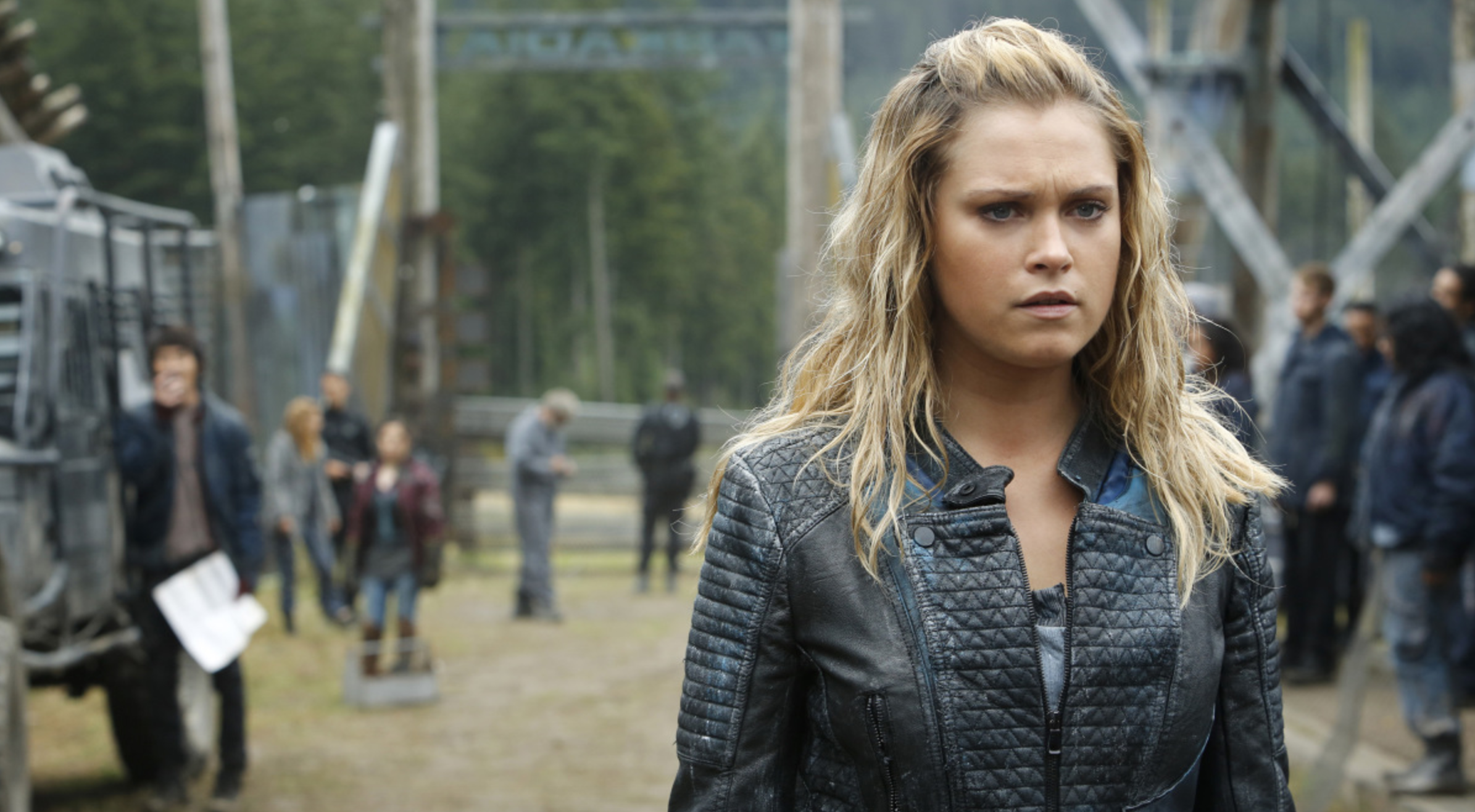
Back in Seasons 1 and 2, I actually really liked Clarke Griffin. She was strong and sensitive and a great leader. However, she has been on a slow de-evolution since Season 3, although it has rapidly gone downhill since Season 4. I wasn't able to quite place why this happened and my subsequent disliking of her as a character. 

But it hit me in 4x11, "The Other Side".

Clarke's cold, stupid, and almost rash decisions are motivated by one thing: nothing. That's it. She's completely lost herself. In this whole battle to save the human race, she's become this archetype trying to save humanity, but also being a total asshole in the process. 


https://fsmedia.imgix.net/db/08/26/30/e42d/4b31/a240/a556ff3daa2f/clarke-griffin-in-a-lie-guarded.png

Clarke has lost her motivation. In Season 1, her motivation was to keep her people safe and to help them survive. In Season 2, it was to get them back home safely. In Season 3, it was pretty much Lexa for a while there, and then it was to save everyone from ALIE. In Season 4, it's become even more generic with 'saving humanity' plotline. But the wider Clarke's motivation gets, the less she feels like a real person, the less we connect with her and root for her. She is lacking a meaningful character arc or motivation, which is necessary for any character. It's like, Step 3 in creating a character.

Another problem is Clarke's lack of relationships. Now, don't get me wrong, I'm not saying that Clarke needs a love interest or should just get with Bellamy already. While that would be nice, what I'm really talking about is how Clarke doesn't have any strong relationships we can root for, whether that be friendships, family members, or someone romantically. These relationships make a character more realistic, human, and make the audience want the main character to succeed. With people that the main character cares about, this raises the stakes. However, Clarke's friends or lovers are all dead, and the ones who aren't, their relationships have been severely neglected. 

Why do we love Bellamy, Octavia, Jasper, Monty, Murphy, and Raven so much?  Because they have people they love and who love them, and they fight for what they want and have clear and realistic character traits. They have interesting motivations that compel them to act and drive their storylines in dynamic and emotional ways. 

On the other hand, Clarke has become flat. Almost a Deus Ex Machina of sorts, where she always is the savior and always has to solve the problem. Without an interesting or emotional motivation, her actions seem, well, bitchy. Because Clarke never has emotional depth, change, or true struggle, she has become a gray slate, stagnant and uninteresting. 

And it's a real tragedy.


~

An amazing little post about the missed opportunity of great character conflict in 4x11:

http://wellamyblake.tumblr.com/post/160552229725/purging-2-disappointments-from-411 

~The WordShaker

Saturday, February 18, 2017

It's More Fun If They Die at The End | Analysis of The 100's Season 4

"The worst thing you write is better than the best thing you did not write," -Ellen Jackson


PSA: Sorry there was no blog post last week. Life caught up with me, and I ended up having NO time. Hopefully that won't happen again. On to this week's post!
~

It's more fun if they die at the end. 


While this isn't always the case, in many post-apocalyptic or science fiction stories, it should be the case, especially when the situation is hopeless. 


Where shows and books write themselves into a corner, is that they set up this hopeless situation, creating this plotline that drives the story. However, what all too often happens is that the infamous plot device deus ex machina quite literally pops up. 


A deus ex machina is where a seemingly unsolvable problem is suddenly abruptly resolved by the inspired and unexpected intervention of a new event. Thanks, Wikipedia. 


The way that Season 4 of the 100 is progressing is that the radiation is exponentially growing, and will wipe out 99% of life on earth, as claimed by the show. The main plot involves them trying to find ways to either stop the radiation or protect everyone from it as it ravages the earth. Our favorite flawed leaders, Clarke and Bellamy, are trying to save the day, along with a neurotic Raven. 


In this past week's episode, there is almost a hope of having another bunker, built by a religious zealot. My initial thoughts during the episode consisted of "oh no, this place is going to be habitable, and then the rest of the season is just going to be them fixing it up and making it usable."


What the episode beautifully pulls off is convincing the audience that this place would be intact and able to support the earth's populous. When this doesn't end up working out for our fatal heroes, I felt almost a relief. 


Why?  Don't I want everything to work out peachy and for everyone to survive?


No, not in this case. Because if another deus ex machina comes in and saves everyone, then there will be no point, the cycle of surviving and killing that The 100 has found itself in will only perpetuate. 


My projection is that this season will be The 100's last. I almost want it to be it's last season, because it will create a beautiful story arc with my predictions. 


1a. Clarke and Bellamy are unable to find another place except the Ark to hold 100 people, almost poetically. 


1b. 100 people, hopefully not our main characters, hole up in the Ark and survive the nuclear meltdowns. Our main characters die happily, having fulfilled their mission and resolved the conflict, and the human race lives on. 


2a. The Ark is somehow damaged beyond the repair of fixing in time. There is no place to hide. 


2b. 99% of the human population dies. However, our characters accept their death and live their last, sick days to the fullest. Or, they put themselves out of their misery via group suicide. 


I want my beloved characters to die because it will wrap up the story. Truly, I see almost no way out of this situation. The only other avenue I could see is if Season 5 would cover the straggling survivors on the Ark. 


However, the ending of the series would be much more impactful if it ended here, and in the two scenarios I provided above. 


It would be more impactful because if everyone or our beloved characters died, then it would give the message that you can't just live life by surviving, and sometimes dying can be more fulfilling than living. If everyone died, it would be poetic justice. The Arkadians sent down the 100 to die, they didn't die, but later, they ended up dying from radiation fallout, having learned all they could on the ground. It would be a fulfilling and timely death for all of our original 100. 


Compare this to the movie Passengers, starring Christ Pratt and Jennifer Lawrence. They are faced with a spaceship that is breaking down, and they have woken up about eighty years too early to arrive at their destination. After fixing the ship, and, of course, realizing they love each other, they accept their fate, which is that they won't be able to reenter cryogenic sleep. So, Pratt's and Lawrence's characters 'bloom where they're planted' so to speak, and live out the rest of their lives, alone on the ship. This is the impactful, deep, and emotional ending I have envisioned for this series. 


I suppose I wouldn't be mad if Season 5 continued on with some of our main characters inside of the ark riding out the radiation, but then, that would definitely have to be the end, with the remaining survivors barely scraping by to rebuild civilization. However, Jasper, everyone's favorite drug addict alongside Charlie Pace, has been the ringleader of what I want to happen. 


The characters learn to live, not just to survive, accept their inevitable death, and find peace within themselves. 


A hesitant watcher because Jason Rothenberg has hurt me too much already,


~The WordShaker

Saturday, October 1, 2016

The Unappreciated Awesomeness of John Murphy | The 100


"Screw this, I'm going for it," -any successful writer ever

After a hard, stressful day at school, sometimes I just need to watch my new favorite TV show: The 100.

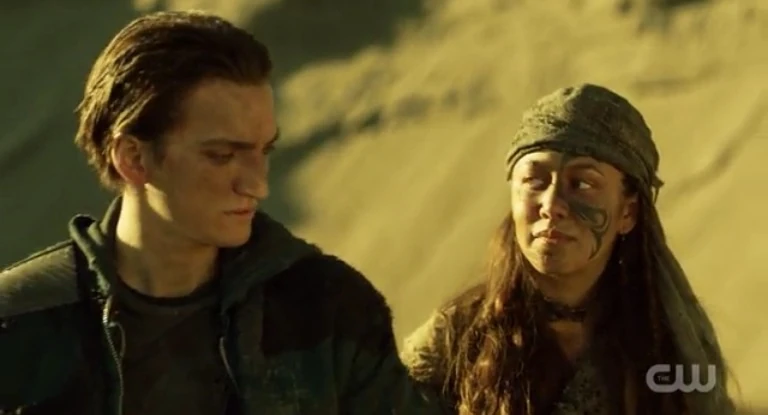
And this week's ramble is about the infamous John Murphy, A.K.A., the resident asshole, who I actually very much enjoy. 

When the show started, I hated him. I thought he was just awful and that's all there was too it. However, he was fun to watch because he was so cynically sarcastic and created conflict. 


But then, I grew to love to hate Murphy. I loved seeing the terrible shit he was going to do next because he was aggressively unpredictable, which, I hate to say, was super entertaining. It made for great tension.  


But then, around the beginning of Season 2, something crazy happened. I was so angry that he shot Raven, but then, in the dropship, he told her his life story, and, all of a sudden, it clicked. And then, soon, he grew into himself, I think. He opened up, and he let that go. 


Murphy's conscience began to show more as him and Jaha began traveling to the City of Light. As soon as he truly saw all of the awful things that Earth - as well as the people on it - had in store, they began to have the opposite effect on him. While other times, it hardened him, it became too much, and he cracked. Murphy changed. 


But what I love so much about this is that he kept his gruff and aggressive demeanor. And, damn it, sometimes he's so funny. His dry humor is perfectly placed, and he knows just what to say at the right time to say it with his beady eyes and pursed lips and scowl.

And so begins Season Three. 

The season starts off with Murphy on the edge of suicide, and his descent into this is powerful and gripping, just another show of Richard Harmon's amazing acting ability. 


He is strong and resilient and conscious in his opposition of Jaha and ALIE. While aspects of Murphy change, such as his outlook on life and his demeanor, the sad, manipulative, selfish, and raunchy core of Murphy never changes. Which is actually pretty great. 


Murphy and Emori together are fantastic. Not only is Emori equally badass and complex, their banter is entertaining, and their chemistry is on fire. 


On to his rape - and yes, Ontari raped him. Right after Titus beat and tortured him. Subtle in it's delivery, it poignantly shows the nuances and coercion of rape. It's just another layer in the deeply broken, sarcastic, and relatable John Murphy. 


The season ends with Murphy as the best part of it. He fights for Emori until the bitter end, and it's utterly fantastic. His greyness as a character is what makes him so dynamic, and, ultimately, so relatable and utterly loveable. 


Overall, I love to hate Murphy, but I also hate to love him. 

He's awesome, cunning, brave, cynical, funny, reckless, and badass. And also just an ass. 

But I absolutely love it. 


~

I've finally concluded that John Murphy is the 'Sawyer' of this series. 

If you have no idea what I just referenced, what the hell are you doing with your life?

~The WordShaker